Here is the part most people miss: both saltwater and chlorine pools are sanitized with chlorine. The difference is how that chlorine gets into the water. A saltwater pool makes its own chlorine from dissolved salt, while a traditional pool uses chlorine you add directly.
For most Southwest Florida homeowners, saltwater offers a softer feel and less day-to-day handling, at a higher upfront cost. Here is how to decide.
What is the difference between saltwater and chlorine pools?
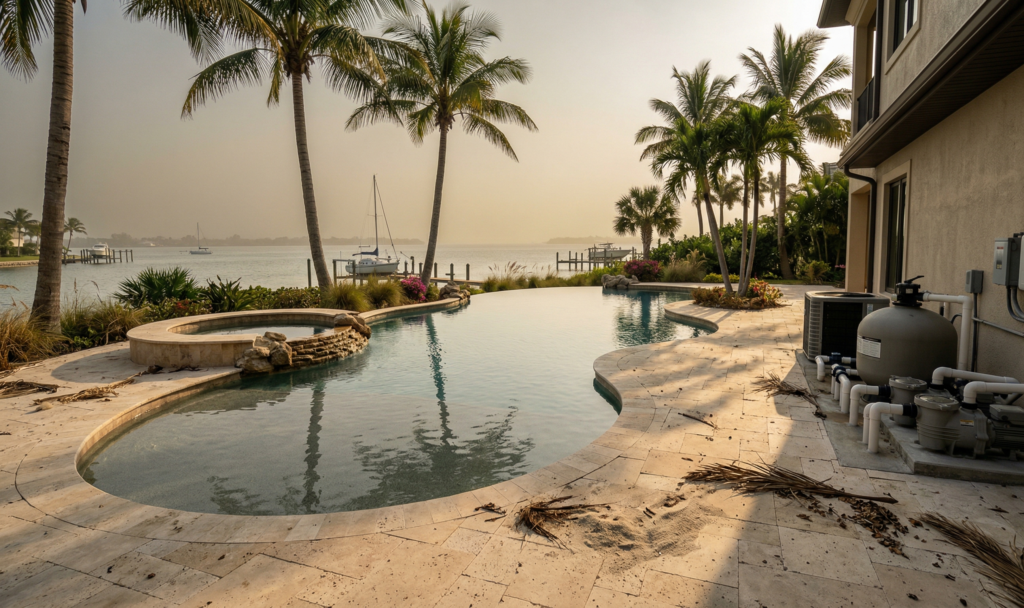
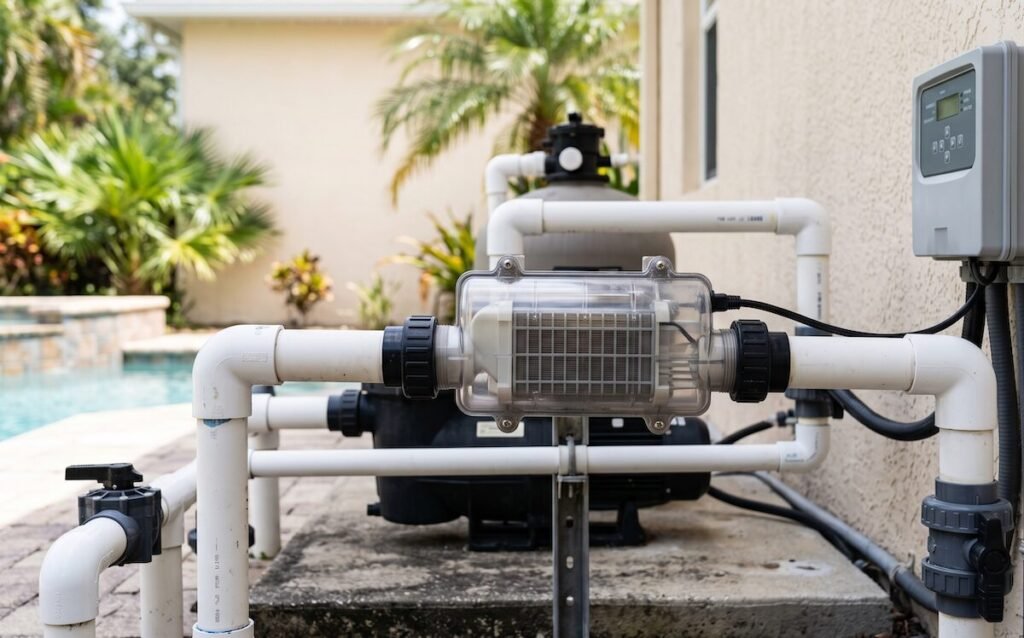
A saltwater pool uses a salt chlorine generator, which passes the pool water over a cell and converts dissolved salt into chlorine continuously. A traditional chlorine pool relies on chlorine you add by hand or through a feeder.
So a saltwater pool is not chlorine-free. It simply produces its chlorine on site, at a lower and steadier concentration, which is why the water often feels gentler.
Are saltwater pools better for Southwest Florida?
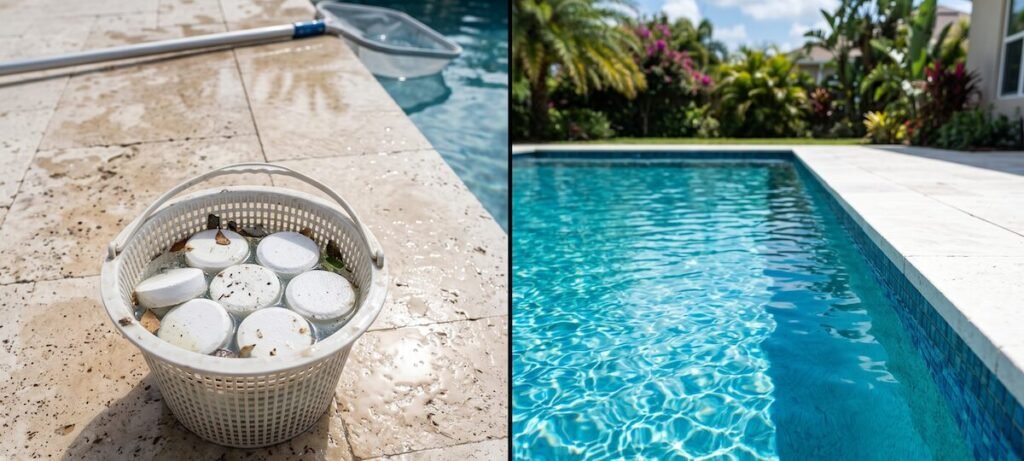
For year-round swimming in our climate, many homeowners prefer saltwater for the feel. The water tends to be softer on skin and eyes, the chlorine level stays steadier, and there is less weekly chemical handling.
A traditional chlorine pool is simpler and cheaper to install, and gives you direct control over chemistry. Both can be excellent pools. The right answer depends on your priorities.
What does a saltwater system cost to run and maintain?
Saltwater systems cost more upfront because the generator and cell need to be replaced every few years. In exchange, ongoing chemical costs are usually lower.
Chlorine pools cost less to install but ask for more hands-on attention and regular chlorine purchases. Over the life of the pool, the two often even out, with saltwater trading a higher start for an easier routine.
Does salt affect decks, equipment, or screens in coastal areas?
It is worth being honest about this one. Salt can be harder over time on certain metals, fixtures, and some natural stone, and that matters near the coast where salt air is already part of the environment. The good news is that thoughtful material choices and routine rinsing go a long way.
We help select deck materials and fixtures that hold up well, which we touch on in our pool deck stone guide, and our maintenance guide explains why coastal pools ask for a bit more care either way.
Which should you choose for your build?
If you value a soft feel and a lighter routine and you do not mind a higher upfront cost, saltwater is a strong fit for Southwest Florida. If you want the lowest install cost and direct control, a chlorine system makes sense. We help you spec the right one during design so it suits your pool, your features, and your budget.
Frequently asked questions
Do saltwater pools still use chlorine?
Yes. A saltwater pool generates its own chlorine from dissolved salt. It is not a chlorine-free pool.
Are saltwater pools cheaper?
They usually cost more to install but less to maintain day to day. Over time the two systems often even out.
Is saltwater gentler on skin and eyes?
Generally yes, because the chlorine level is lower and steadier than in a manually dosed pool.
Can you convert a chlorine pool to saltwater?
Often yes, by adding a salt chlorine generator. Have your pool and equipment assessed first.
Ready to talk it through? Schedule a consultation and we will help you choose the system that fits your pool and how you want to use it.