A pool in Southwest Florida works a little differently than one up north. Warm water through most of the year, heavy summer rain, and long swimming seasons all shape how often a pool needs attention. Here is what regular upkeep really looks like in this climate.
Why the climate sets the rhythm
In much of the country, a pool gets opened in spring and closed in fall. In Southwest Florida, pools stay open. That changes everything about maintenance. There is no winterizing and no cover season, which means the water is always working and always needs care.
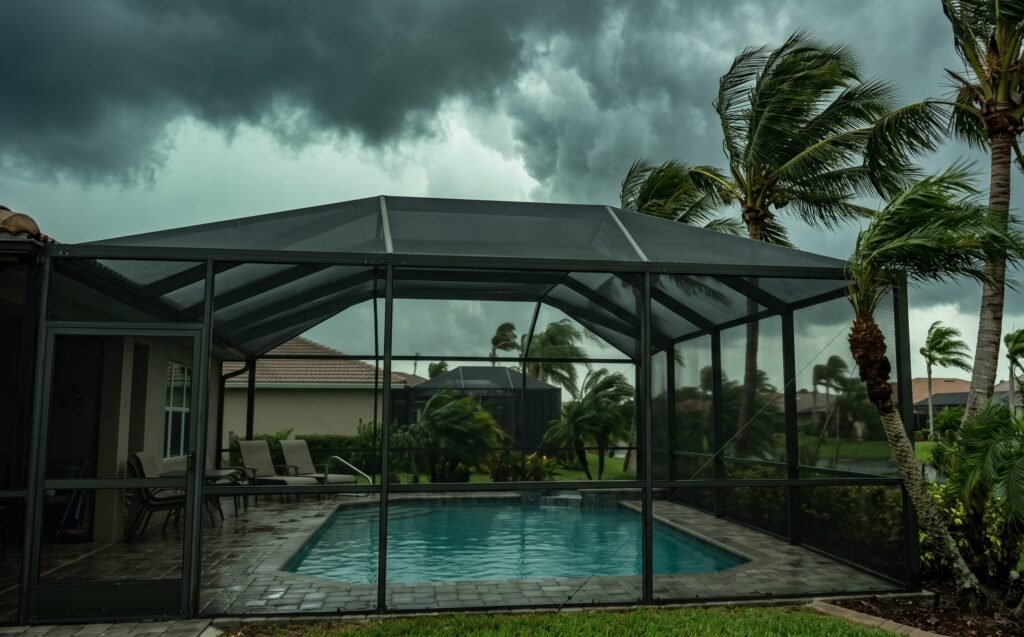
A few local factors matter most. Heat speeds up evaporation and chemical reactions, so balance shifts faster than you might expect. The rainy season, roughly June through September, dilutes water chemistry and adds runoff and organic debris that feed algae. Spring brings pollen and heavy landscaping shed. A screen enclosure helps with debris and is well worth having here, though it does not remove the need for routine care.
The weekly basics
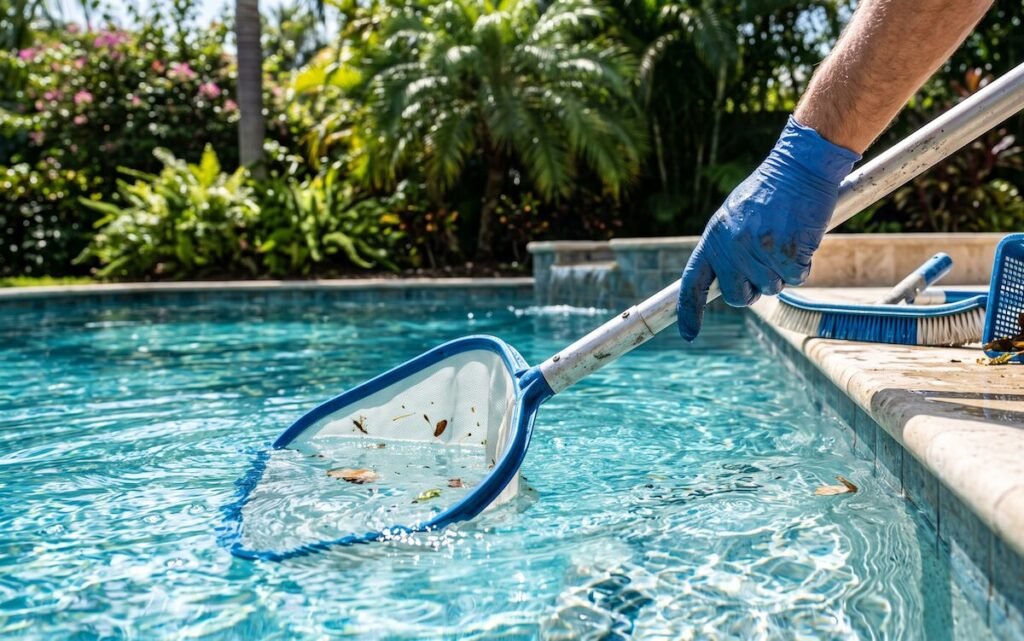
Most of what keeps a pool healthy is simple and repeatable. On a weekly basis, plan to:
- Skim the surface and empty the skimmer and pump baskets.
- Brush the walls, steps, and any tanning ledge where film can build.
- Vacuum the floor, or let a robotic or suction cleaner handle it.
- Test the water and adjust as needed.
- Check the water level, which drops quickly in summer heat.
None of this is complicated. The key is consistency, because in this climate a pool left alone for two weeks in July looks very different than one left alone for two weeks in January.
Water chemistry, kept simple
You do not need to be a chemist. A handful of numbers carry most of the work:
- Sanitizer. Chlorine is doing the cleaning whether it comes from tablets or from a salt system. If your pool runs on salt, the generator produces chlorine from the salt in the water, so the principle is the same.
- pH. Aim for roughly 7.4 to 7.6. Comfortable for swimmers and easy on equipment and finishes.
- Total alkalinity. Around 80 to 120 parts per million keeps pH stable.
- Calcium hardness. Worth checking so the water is neither aggressive on surfaces nor prone to scaling.
The practical tip for our area: test more often during the rainy season. A heavy afternoon storm can move your chemistry noticeably, so a quick check after big rain saves you from chasing a problem later.
Equipment that earns a regular look
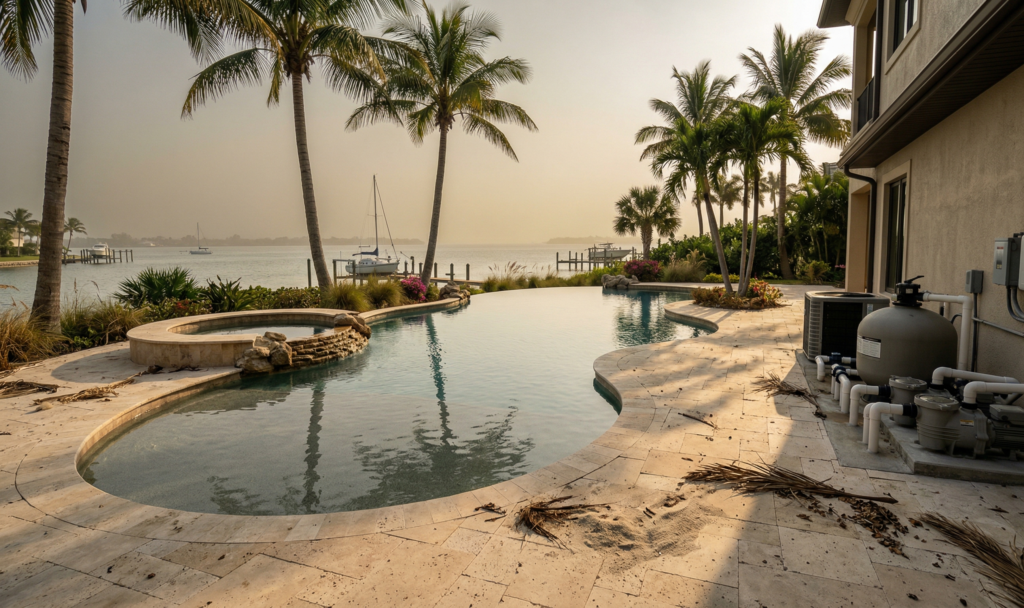
The water gets most of the attention, but the equipment is what keeps it moving.
Pump and filter
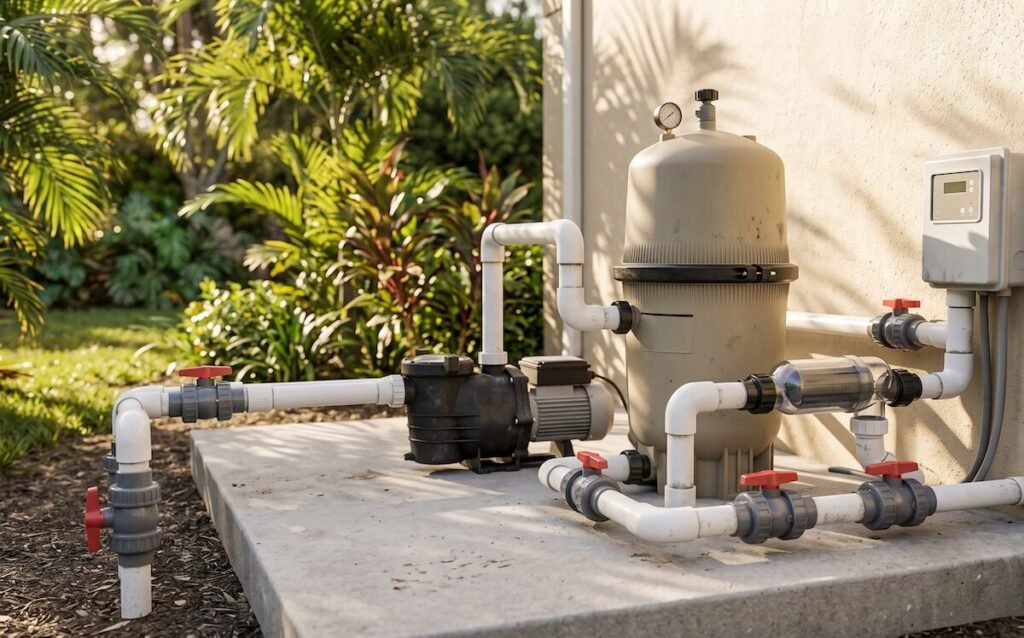
Run the pump enough to turn the water over each day, and clean or backwash the filter on schedule. A clogged filter quietly makes everything else harder.
Salt cell
If you have a salt system, the cell needs periodic inspection and cleaning, and it will eventually need replacement after a few years of use. Catching scale buildup early keeps it producing properly.
Heater, automation, and enclosure
Heaters and automation systems benefit from an occasional check, especially before you rely on them. And because so many local pools sit inside a screen enclosure, it is worth keeping the structure and screen clear of debris and watching for any storm-season wear.
Doing it yourself, or having it serviced
Plenty of owners handle the weekly basics themselves and enjoy the routine. Others would rather hand it off and simply use the pool. Both are reasonable. We offer maintenance and service for pools in our markets, though most of what we do is building and renovating. Either way, the goal is the same: clean, balanced water and equipment that lasts.
If your pool is also showing its age in ways no amount of upkeep fixes, that is a different conversation, and telling a maintenance issue from a renovation one is worth doing before you spend on either.
Questions about your pool?
Whether you are caring for a pool you love or thinking about building one, we are happy to talk it through. Coastal Custom Pool & Spa has served Southwest Florida for more than thirty years.
Get in touch | Call (239) 437-3636