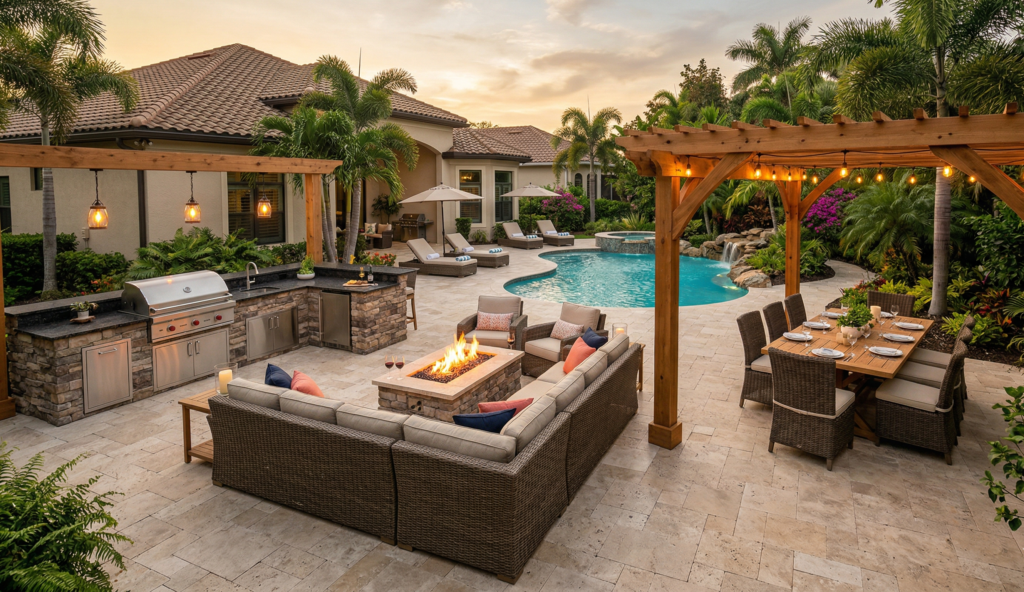
Outdoor kitchens transform how you entertain and use your outdoor space. Cooking outside keeps heat out of your home, puts you with your guests instead of isolated indoors, and extends your living area into the yard.
But outdoor kitchens range from simple grill islands to elaborate cooking zones with every appliance imaginable. Understanding which features actually get used and which become expensive dust collectors helps you invest wisely.
At Coastal Custom Pool & Spa, we’ve built outdoor kitchens throughout coastal Florida for over 30 years. We’ve learned which features earn their space and which homeowners wish they’d skipped.
Essential Features
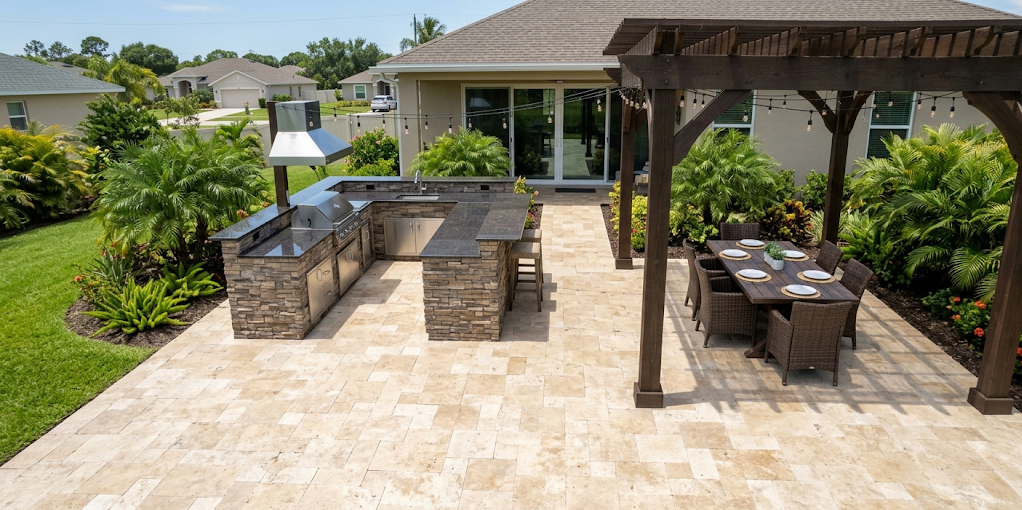
Start with the basics that make outdoor cooking functional.
Grill
The grill is the foundation of any outdoor kitchen. Size and quality matter more than feature count.
Sizing Your Grill:
- 36 inches handles most families and casual entertaining (4-6 burners)
- 42 inches provides more cooking surface for frequent entertaining
- 48+ inches for serious grill enthusiasts or large regular gatherings
Built-in vs. Drop-in:
Built-in grills integrate permanently into your outdoor kitchen island. Drop-in grills install into a prepared opening but can be replaced independently of the structure.
Drop-in offers flexibility for future upgrades without rebuilding counters.
Quality Considerations:
Commercial-grade stainless steel (304 or 316) performs best in coastal Florida. Salt air corrodes lesser grades quickly.
Better grills have thicker grates, better heat distribution, and components that last 15-20 years. Budget grills need replacement in 5-7 years.
Counter Space
Adequate prep space is the difference between functional outdoor cooking and constantly running to the indoor kitchen.
Minimum: 18 inches on each side of the grill Better: 24-30 inches on at least one side Ideal: Separate prep counter away from grill heat
Without sufficient counter space, you’re setting plates on chairs, balancing bowls awkwardly, and making unnecessary trips indoors.
Storage
Cabinets or drawers for utensils, plates, seasonings, and supplies prevent constant indoor trips.
Essential storage:
- Utensil drawer near grill
- Cabinet for plates and serving dishes
- Space for cleaning supplies
- Propane tank storage (if not using natural gas)
Door and drawer materials must be outdoor-rated. Standard indoor cabinetry fails quickly in Florida’s humidity.
Refrigeration
An outdoor-rated refrigerator or beverage cooler dramatically improves functionality.
Benefits:
- Cold drinks without indoor trips
- Food storage during prep and cooking
- Ice production (if you include ice maker)
Outdoor-rated vs. standard:
Standard residential refrigerators aren’t designed for outdoor temperature swings and humidity. They fail quickly when installed outside.
True outdoor refrigerators cost more ($1,500-$4,000+) but handle heat, humidity, and temperature fluctuations.
Sink
A sink transforms outdoor kitchen usability.
What it enables:
- Rinsing vegetables
- Washing hands
- Cleaning utensils
- Filling pots
- General cleanup
Requirements:
Sinks require both water supply and drainage. This adds $2,000-$4,000+ to project cost depending on distance from house and existing plumbing.
Hot water isn’t essential but nice to have. Small on-demand heaters provide hot water without running lines from the house water heater.
Nice-to-Have Features
These features add convenience but aren’t essential for functional outdoor cooking.
Side Burners
Burners for heating sauces or boiling water complement grill cooking.
Reality check: Many homeowners use side burners initially but find they prefer doing stovetop cooking indoors where they have full kitchen access. Consider whether you’ll actually use it regularly.
Cost: $800-$1,600 depending on BTU output and quality
Pizza Ovens
Wood-fired or gas pizza ovens create authentic pizza and add visual interest.
Reality check: Pizza ovens get enthusiastic use initially but frequency often drops after the novelty wears off. If you’re passionate about pizza making, it’s worth it. If you think it “sounds fun,” consider carefully.
Cost: $3,000-$8,000+ installed
Warming Drawers
Keep food warm while finishing other items.
Reality check: Useful for large gatherings when timing multiple dishes. Less valuable for casual family cooking. Consider how often you’d actually use it.
Cost: $800-$2,000
Outdoor Refrigerator Drawers
Refrigerator drawers provide cold storage in a compact format.
Reality check: Convenient for drinks and small items. Less practical for full meal prep storage. Work well supplementing a full-size refrigerator.
Cost: $1,200-$3,000+
Kegerators
Built-in beer tap systems.
Reality check: Fun for beer enthusiasts who go through kegs regularly. Novelty for most homeowners. Requires keg changes and CO2 maintenance.
Cost: $1,500-$4,000+
Smokers
Dedicated smoking units for low-and-slow cooking.
Reality check: If you’re passionate about smoking meat, worth considering. If you smoke occasionally, a standalone unit you can move makes more sense than permanent installation.
Cost: $2,000-$6,000+ for quality built-in units
Layout and Workflow
How you arrange your outdoor kitchen affects functionality significantly.
The Work Triangle
Like indoor kitchens, outdoor kitchens benefit from efficient layout. Grill, prep area, and refrigeration should be within easy reach without crowding.
Linear layouts work for spaces against walls or fences. Everything lines up in a row.
L-shaped layouts provide more counter space and separate cooking from prep areas.
Island layouts offer access from multiple sides and integrate into open outdoor spaces well.
Positioning Relative to Indoor Kitchen
Place your outdoor kitchen 15-20 feet maximum from your indoor kitchen. Direct path access makes transferring food, supplies, and dishes manageable.
Outdoor kitchens positioned 40-50 feet from the house become inconvenient. You’ll find yourself using them less than expected.
Cook Facing the Gathering
Position the grill so the cook faces toward dining, lounging, or pool areas not a wall or fence.
This keeps the cook engaged in conversation and aware of guests rather than isolated facing away.
Wind and Smoke
Consider prevailing winds when positioning grills. In coastal Florida, afternoon breezes typically come from the southwest.
Position cooking so smoke doesn’t blow constantly toward dining or seating areas.
Shade Considerations
Cooking in direct Florida sun is uncomfortable. Provide shade over at least part of your outdoor kitchen.
Pergolas filter sun while allowing ventilation. Solid roof covers provide complete shade and rain protection but require more substantial structure.
Materials for Coastal Florida
Material selection affects both appearance and longevity in coastal climate.
Counter Materials
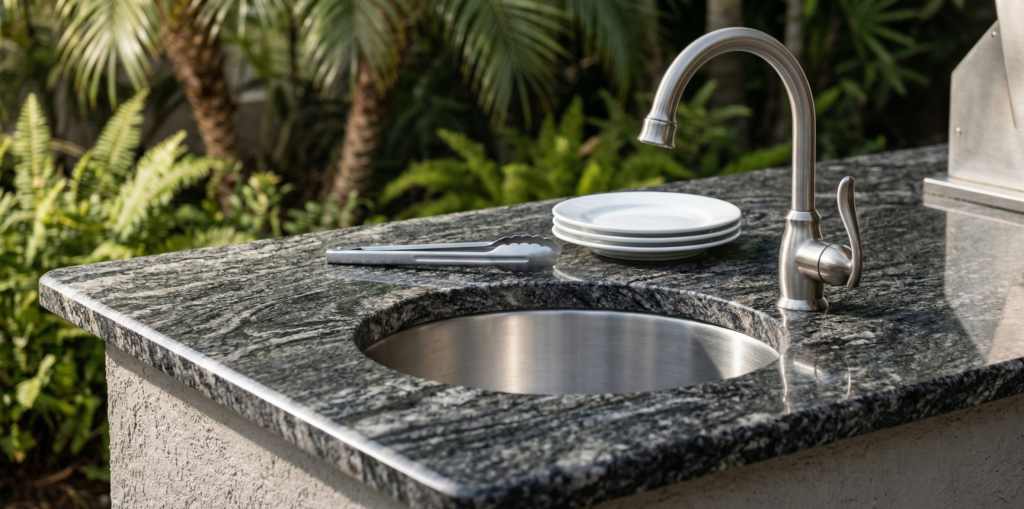
Granite: Durable, heat-resistant, handles coastal environment well. Requires periodic sealing. Cost: $40-$80/sq ft and more installed.
Concrete: Versatile, can be formed to custom shapes. Requires regular sealing (every 1-3 years). Cost: $50-$100+/sq ft and more installed.
Tile: Many color and pattern options. Grout lines require maintenance. Porcelain tile performs better than natural stone. Cost: $15-$40/sq ft and more installed.
Stainless Steel: Industrial appearance, extremely durable, handles coastal environment well. Shows fingerprints and water spots. Cost: $80-$150+/sq ft and more installed.
Cabinet and Door Materials
Stainless steel: Best performance in coastal environment. Won’t rot, warp, or corrode. Premium cost.
Marine-grade polymer: Designed for outdoor use, won’t rot or deteriorate. Mid-range cost.
Powder-coated aluminum: Durable, corrosion-resistant. Requires quality coating. Mid-range cost.
Avoid: Standard wood cabinets, even if sealed. Florida’s humidity causes warping and deterioration.
Structure Materials
Outdoor kitchen structures face the same environmental challenges as pergolas and pavilions.
Stucco or masonry: Extremely durable, handles weather well. Traditional appearance. Higher initial cost.
Composite or PVC: Won’t rot or deteriorate. Lower maintenance than wood. Premium cost but eliminates ongoing maintenance.
Avoid: Standard lumber for visible elements. Even pressure-treated wood requires constant maintenance and eventual replacement.
Utilities and Infrastructure
Outdoor kitchens require proper utilities.
Gas Lines
Natural gas lines run from your home’s gas meter to the outdoor kitchen. Professional installation required.
Cost: $1,500-$4,000 plus depending on distance and capacity needs.
Propane alternative: Propane tanks don’t require gas lines but need periodic refilling and proper storage.
Electrical
Outdoor kitchens need multiple GFCI-protected circuits for:
- Refrigeration
- Lighting
- Outlets for small appliances
- Potential future equipment
Cost: $2,500-$6,000+ depending on circuits needed, distance from panel, and existing capacity. Service upgrades add $2,000-$5,000+.
Plumbing
Water supply and drainage for sinks require professional installation.
Cost: $2,000-$5,000 depending on distance from house and site conditions.
Hot water lines add cost. Small on-demand heaters offer alternative to running hot water lines long distances.
Lighting
Task lighting over cooking and prep surfaces is essential for evening use. Ambient lighting creates comfortable atmosphere.
Budget: $1,500-$4,000+ for comprehensive outdoor kitchen lighting. And significantly more for very intricate and extenive lighting.
Budget Expectations
Outdoor kitchen costs vary dramatically based on scope and quality.
Basic grill island (no utilities): $8,000-$15,000
- Built-in grill, basic counter space, storage
Functional outdoor kitchen: $20,000-$40,000
- Built-in grill, adequate counter space, sink, refrigeration, storage, lighting, all utilities
Comprehensive outdoor kitchen: $40,000-$70,000+
- High-end grill, extensive counter space, sink with hot water, full-size refrigerator, additional appliances, premium materials, complete lighting
Luxury outdoor kitchen: $70,000-$150,000+
- Top-tier appliances, multiple cooking surfaces, extensive counter space, premium materials throughout, integrated into larger covered outdoor living space
Common Mistakes to Avoid
Learn from others’ errors.
Undersized Counter Space
The most common regret. “I wish I’d made the counters bigger” is far more common than “I have too much counter space.”
Err on the side of more prep area.
Too Many Specialty Appliances
Pizza ovens, warming drawers, kegerators, and smokers sound appealing but often go unused. Start with essentials and add specialty items later if you find yourself wanting them.
No Weather Protection
Outdoor kitchens without shade or cover get far less use than covered versions. Florida sun and frequent rain make weather protection valuable.
Cheap Appliances and Materials
Budget grills and non-outdoor-rated appliances fail quickly in coastal Florida. Better quality costs more upfront but lasts 2-3x longer.
Poor Positioning
Outdoor kitchens too far from the house or facing away from gathering areas don’t get used as much as well-positioned ones.
Frequently Asked Questions
What size grill do I need for my outdoor kitchen?
A 36-inch grill (4-6 burners) handles most families and casual entertaining. Upgrade to 42 inches if you frequently host larger gatherings. Only go 48+ inches if you’re a serious grill enthusiast or regularly cook for 12+ people.
Do I need a sink in my outdoor kitchen?
A sink isn’t essential but dramatically improves functionality. You can rinse vegetables, wash hands, clean utensils, and fill pots without going inside. If budget allows, include it. If budget is tight, rough in plumbing for future addition.
How much counter space should an outdoor kitchen have?
Minimum 18 inches on each side of the grill. Better is 24-30 inches on at least one side. If possible, include a separate prep counter away from grill heat. More counter space is the most common “wish I’d done differently” comment.
What appliances actually get used regularly?
Grills get used constantly. Refrigeration gets used daily. Sinks get used every cooking session. Side burners see occasional use. Pizza ovens, warming drawers, and specialty appliances often see enthusiastic initial use that drops off over time.
Should I use natural gas or propane for my outdoor grill?
Natural gas is more convenient (never runs out) but requires gas line installation ($1,500-$4,000). Propane doesn’t require installation but needs periodic refilling and tank storage. Both work well—choose based on whether you have natural gas service and installation feasibility.
How do I protect outdoor kitchen appliances from salt air?
Choose appliances with marine-grade stainless steel (304 or 316 grade). Rinse fixtures periodically to remove salt residue. Ensure proper ventilation to reduce moisture accumulation. Cover appliances when not in use for extended periods.
Can I use a regular refrigerator outside?
No. Standard residential refrigerators aren’t designed for outdoor temperature swings and humidity. They fail quickly when installed outside. Invest in outdoor-rated refrigeration ($1,500-$4,000+) that’s designed for the environment.
What’s the minimum budget for a functional outdoor kitchen in Southwest Florida?
Plan $30,000-$45,000 minimum for a basic functional outdoor kitchen with built-in grill, adequate counter space, sink, refrigeration, storage, and proper utilities. Less than this typically means compromising essential features or quality. Plan for more with a fully customized outdoor kitchen.
Ready to Design Your Outdoor Kitchen?
If you’re planning an outdoor kitchen in Naples, Fort Myers, Sanibel, or Captiva, we can help you design a functional cooking space that fits your lifestyle and budget.
Call us at (239) 437-3636 to schedule a consultation where we’ll discuss how you cook, entertain, and use outdoor spaces to design an outdoor kitchen that actually gets used.
We design and build complete outdoor living environments including kitchens, fire features, and covered lounges. See our work in Naples, Fort Myers, and across Southwest Florida. Browse completed outdoor projects or book a consultation.
Over 30 years building outdoor kitchens in coastal Florida. We know what features add value and what becomes expensive regrets.