Outdoor living spaces in coastal Florida offer comfortable temperatures for evening use most of the year. But without proper lighting, your outdoor kitchen, dining area, and lounging spaces become unusable after sunset.
Good outdoor lighting does more than illuminate; it extends functionality into evening hours, creates ambiance, highlights architectural features, and improves safety. Poor lighting wastes your investment in outdoor living by limiting when you can actually use the space.
Understanding how to layer different types of lighting helps you create outdoor areas that work as well at 9 PM as they do at 9 AM.
Why Outdoor Lighting Matters
Lighting transforms outdoor spaces from daytime-only areas into fully functional evening environments.
Extended Usability
Without lighting, your outdoor kitchen is unusable after dark. Your dining area sits empty on pleasant evenings. Your pool area becomes a dark void.
Proper lighting extends your outdoor living season from daylight hours to any time you want to use the space.
Safety
Dark steps, uneven pavers, pool edges, and changes in elevation all create hazards without adequate illumination.
Lighting prevents accidents by making transitions, edges, and obstacles visible.
Ambiance
Evening gatherings have different atmosphere than daytime use. Lighting sets mood and creates welcoming environments that encourage people to linger outdoors.
Harsh overhead floods destroy ambiance. Thoughtful layered lighting creates comfortable, inviting spaces.
Security
Well-lit outdoor areas deter unwanted activity and provide visibility around your property perimeter.
Motion-activated lighting adds security without keeping lights on constantly.
Types of Outdoor Lighting
Effective outdoor lighting combines multiple types, each serving different purposes.
Task Lighting
Task lighting provides functional illumination for specific activities.
Cooking Areas: Overhead lighting over grills and prep surfaces lets you see what you’re cooking. Under-cabinet lights illuminate countertops for food prep.
Adequate task lighting in outdoor kitchens is essential—you need to see clearly when handling hot surfaces and sharp knives.
Dining Areas: Overhead lighting over dining tables allows comfortable eating and conversation after dark. Fixtures should provide enough light to see food and faces without harsh glare.
Dimmable fixtures adjust from functional dinner lighting to softer ambiance for after-dinner drinks.
Walkways and Steps: Path lighting guides movement between zones and illuminates changes in elevation. Low-voltage fixtures along pathways prevent tripping hazards.
Step lights built into risers or adjacent walls illuminate each tread without creating glare.
Ambient Lighting
Ambient lighting provides overall illumination without bright focal points.
Indirect Lighting: Fixtures mounted above pergola beams or under overhangs bounce light off ceilings and walls, creating soft general illumination without visible bright bulbs.
String Lights: While casual, quality string lights (not cheap party lights) provide ambient illumination and festive atmosphere. They work well over dining areas and gathering zones.
Recessed Lighting: Fixtures recessed into pergola beams, soffits, or overhead structures provide downward ambient light without visible fixtures cluttering the view.
Accent Lighting
Accent lighting highlights specific features and adds visual interest.
Uplighting: Fixtures at ground level aimed upward illuminate trees, architectural elements, or structure posts. This creates depth and drama while keeping light sources hidden.
Feature Lighting: Spotlights or wash lights highlight water features, fire features, or focal walls. These draw the eye and create visual anchors at night.
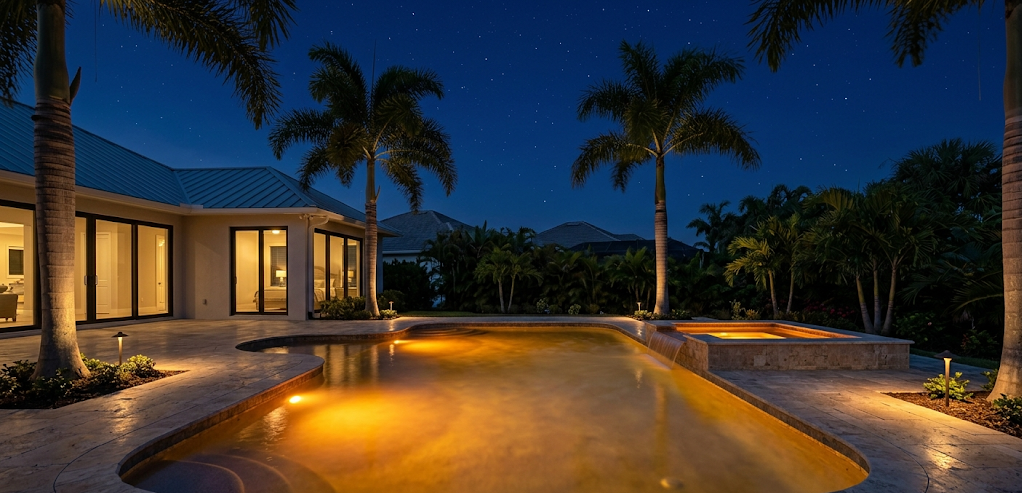
Underwater Pool Lighting: LED pool lights transform pools into glowing focal points at night. Modern LED fixtures offer color options and energy efficiency.
Landscape Lighting
Landscape lighting extends beyond hardscape into plantings and property edges.
Tree Lighting: Uplighting specimen trees creates depth and frames your outdoor living areas within the landscape.
Border Lighting: Low fixtures along property edges or garden beds define space boundaries and add layers of illumination.
Moonlighting: Fixtures mounted high in trees aimed downward create dappled light patterns that mimic natural moonlight filtering through branches.
Layering Light Effectively
The best outdoor lighting uses multiple types working together.
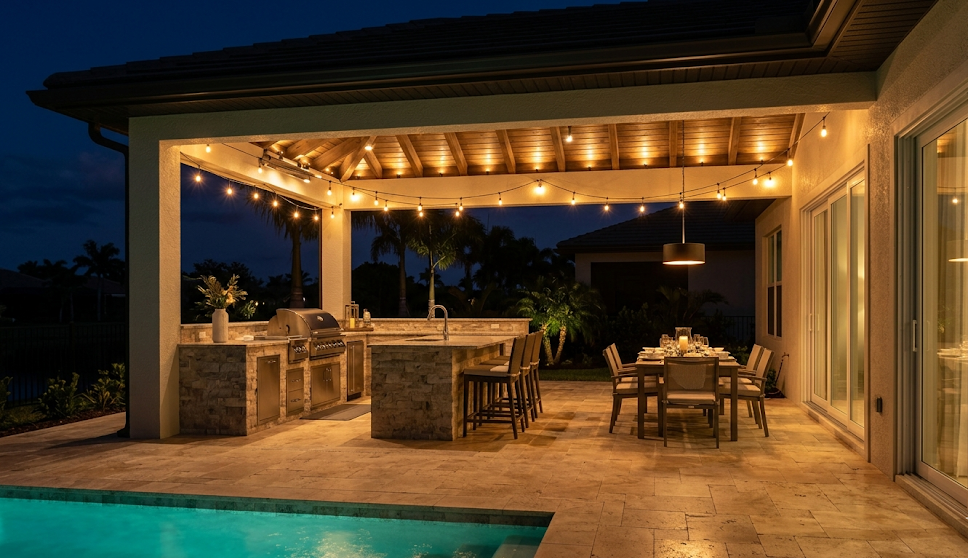
Start With Task Lighting
Identify where you need functional light cooking, dining, walking, steps. These areas require adequate illumination first.
Task lighting determines minimum fixture requirements and power needs.
Add Ambient Layer
Once task lighting is placed, add ambient sources to fill in overall illumination. This prevents the harsh contrast of bright task lights in otherwise dark spaces.
Ambient lighting connects zones visually and creates cohesive feel across your outdoor area.
Finish With Accents
Accent lighting adds polish and visual interest. These fixtures highlight features worth showcasing and create depth through layered illumination.
Accent lighting is where personality and style emerge in your lighting design.
Placement Considerations
Where you place fixtures affects both function and aesthetics.
Avoid Glare
Fixtures should illuminate surfaces without creating glare in sight lines. Dining and lounging areas especially need light without bright bulbs visible from normal seated positions.
Shielded fixtures, recessed mounting, or indirect bounce lighting all control glare effectively.
Consider Sight Lines
Think about what you see from different vantage points. Fixtures visible from indoor living spaces or main outdoor seating should be attractive, not industrial.
Hidden fixtures—recessed, tucked above beams, mounted behind plantings—provide light without cluttering views.
Height Matters
Overhead fixtures at 8 to 10 feet provide good task lighting without being too high. Very high fixtures spread light broadly but may not provide adequate task illumination.
Low fixtures (12 to 24 inches) work well for paths and borders without interfering with movement or views.
Spacing and Coverage
Space fixtures to provide even coverage without dark gaps or overly bright spots. Overlapping light patterns create smooth transitions.
For pathways, fixtures every 8 to 12 feet typically provide adequate coverage. For dining areas, fixtures should illuminate the entire table evenly.
Technical Considerations
Outdoor lighting involves electrical and practical factors beyond aesthetics.
Low Voltage vs. Line Voltage
Low Voltage (12V): Most outdoor lighting uses low-voltage systems. A transformer reduces standard 120V power to 12V. Low-voltage systems are safer, easier to install, and less expensive to modify.
Low-voltage fixtures work well for path lighting, accent lighting, and most landscape applications.
Line Voltage (120V): Standard household voltage. Required for some overhead fixtures, fans, and high-output applications. Installation requires licensed electricians and proper permitting.
Line voltage works for overhead dining fixtures, outdoor kitchen task lighting, and ceiling fans in covered areas.
LED vs. Incandescent
LED fixtures are now standard for outdoor lighting. They offer:
- Dramatically longer lifespan (25,000+ hours vs. 1,000 for incandescent)
- Much lower energy consumption (80% less than incandescent)
- Less heat output (important in Florida’s climate)
- Better color options and control possibilities
Initial cost is higher, but lifecycle cost is much lower. LED is the smart choice for new installations.
Color Temperature
Color temperature affects mood and appearance. Measured in Kelvin (K):
2700K-3000K (Warm White): Creates cozy, inviting atmosphere. Best for dining areas, lounging zones, and ambient lighting.
3500K-4000K (Neutral White): Balanced white light. Works for task lighting in cooking areas where you need to see clearly.
5000K+ (Cool White): Bright, crisp light. Generally too harsh for residential outdoor living—save for security or utility areas.
For outdoor living spaces, stick to 2700K-3000K for most applications. This creates warm, welcoming environments.
Bugs and Color Temperature
Outdoor lighting in Florida means dealing with insects attracted to light. Combining the right color temperature with strategic placement minimizes this issue.
Why warm white helps: Insects are attracted to UV wavelengths. LED fixtures emit less UV than incandescent, and warm color temperatures (2700K-3000K) attract fewer bugs than cool white LEDs.
Strategic positioning: Place fixtures away from primary gathering areas when possible. Uplighting trees draws insects away from dining tables. Pathway lights along borders attract bugs away from center seating.
Position fixtures so light shines where you need it without concentrated bright sources near where people sit.
Bug zappers don’t help: Bug zappers kill beneficial insects while attracting more bugs to the area. Skip them.
Fans in covered areas create airflow that naturally discourages insects and keeps people more comfortable. In coastal areas, sea breezes provide natural ventilation position covered spaces to take advantage of prevailing winds.
Controls and Automation
Dimmers: Essential for dining and ambient lighting. Dimming allows adjustment from functional task light to soft evening ambiance.
Not all LED fixtures are dimmable verify compatibility before purchase.
Timers: Automatically turn lights on at sunset and off at set times. Prevents wasting power and ensures lighting is active when needed.
Smart Controls: WiFi-enabled systems allow control from phones, integration with home automation, and scene programming. You can create different lighting configurations for different activities.
Zoning: Divide lighting into zones that can be controlled independently. Outdoor kitchen, dining, pool, and landscape lighting should all switch separately.
This allows using only the lighting you need for current activity.
Coastal Environment Considerations
Florida’s coastal environment affects outdoor lighting.
Salt Air Corrosion
Salt air accelerates corrosion of metal fixtures and connections. Choose fixtures rated for coastal/marine environments.
Stainless steel, powder-coated aluminum, and composite materials all perform better than standard finishes near the coast.
Moisture and Humidity
All outdoor fixtures should be rated for wet locations. High humidity requires sealed fixtures that prevent moisture infiltration.
Check fixtures periodically for moisture inside lenses this indicates failed seals that need attention.
UV Exposure
Intense Florida sun degrades plastics and fades finishes. Quality fixtures use UV-resistant materials and finishes that withstand years of sun exposure.
Cheap fixtures look acceptable initially but deteriorate quickly under UV assault.
Hurricane Preparedness and Secure Mounting
Post-Hurricane Ian, building codes have heightened focus on secure fixture mounting. Removable fixtures or those on breakaway mounts reduce damage risk during hurricanes, but permanently mounted fixtures must be secured according to updated wind-load requirements.
Work with contractors familiar with current Collier and Lee County code requirements for outdoor fixture mounting. Properly secured fixtures withstand high winds better and reduce projectile risks.
Consider which fixtures should be removable for storm preparation versus permanently mounted with enhanced securing methods.
Installation and Maintenance
Proper installation ensures long-term performance.
Licensed Electricians Required
Line-voltage installation requires licensed electricians. Many municipalities require permits and inspections for outdoor electrical work.
Even low-voltage systems benefit from professional installation when integrated with home electrical systems.
Waterproof Connections
All wire connections must be waterproof. Moisture infiltration causes shorts and system failures.
Direct-burial wire rated for underground use prevents deterioration from ground moisture.
Access for Maintenance
Plan for bulb replacement and fixture maintenance. Fixtures mounted 12+ feet high need safe access via ladder or lift.
LED longevity reduces maintenance frequency, but eventual replacement is still necessary.
Cleaning Fixtures
Coastal environment deposits salt residue on fixtures. Annual cleaning with fresh water prevents buildup and corrosion.
Wipe lenses to maintain light output dirty lenses dramatically reduce illumination.
Common Lighting Mistakes
Several errors compromise outdoor lighting effectiveness.
Too Few Fixtures
Underlit spaces feel dark and uninviting. Better to have fixtures you don’t always use than insufficient lighting when you need it.
Zoning and dimmers allow reducing output when full illumination isn’t needed.
All One Type
Using only overhead lights or only accent lights creates unbalanced illumination. Effective lighting layers multiple types.
Too Bright
More lumens isn’t always better. Overly bright lighting destroys ambiance and creates harsh shadows.
Start with moderate output and add more if needed. It’s easier to add fixtures than reduce output from overly bright installations.
Forgetting Dimmers
Fixed-output lighting can’t adjust for different activities. Dimmers provide flexibility to match lighting to use.
Visible Bulbs at Eye Level
Exposed bulbs in sight lines create glare and visual discomfort. Shield or recess fixtures to control brightness.
No Professional Input
Lighting design significantly affects outdoor living functionality. Professional input during design prevents expensive corrections later.
Budget Considerations
Outdoor lighting costs vary based on system complexity.
Low-voltage landscape lighting: $3,000 to $8,000 for comprehensive system covering pathways, plantings, and accent lighting.
Overhead task and ambient lighting: $2,000 to $6,000+ depending on fixture count, quality, and power requirements.
Smart controls and automation: $500 to $2,000+ for basic WiFi controls; $2,000 to $5,000+ for full integration with home automation, pool/spa systems, and advanced scene programming. Integration with existing pool lighting and equipment adds value by creating unified control of all outdoor systems.
Complete outdoor lighting for full outdoor living spaces typically ranges from $5,000 to $15,000+ depending on property size and complexity.
Frequently Asked Questions
How many lumens do I need for outdoor dining lighting?
Aim for 300-500 lumens per fixture over dining tables for comfortable task lighting. Dimmers allow reducing to 100-200 lumens for ambient evening atmosphere. Multiple fixtures spread evenly provide better coverage than one bright source.
Should I use warm white or cool white LEDs outdoors?
Use warm white (2700K-3000K) for outdoor living areas. This creates inviting ambiance and attracts fewer insects. Save neutral (3500K) or cool white (4000K+) for utility areas or security lighting.
How do I reduce bugs around outdoor lighting?
Use warm color temperature LEDs (2700K-3000K), position bright fixtures away from gathering areas, use uplighting to draw insects away from seating, and consider ceiling fans in covered areas to create airflow that discourages insects.
Can I install outdoor lighting myself?
Low-voltage landscape lighting can be DIY-installed with basic electrical knowledge. Line-voltage installations (120V) require licensed electricians and permits. Even low-voltage benefits from professional design and integration with existing electrical systems.
How long do LED outdoor lights last?
Quality LED fixtures last 25,000 to 50,000+ hours. At 4 hours per evening, that’s 15-30+ years of use. This makes LED significantly more economical than incandescent despite higher initial cost.
Do I need different lighting zones?
Yes. Separate control zones for outdoor kitchen, dining, pool, lounging, and landscape lighting allow using only what you need. This saves energy and provides flexibility for different activities.
What fixtures hold up best in coastal Florida?
Choose fixtures rated for marine/coastal environments with corrosion-resistant finishes. Powder-coated aluminum, stainless steel, and composite materials outperform standard finishes. Sealed fixtures prevent moisture infiltration from humidity.
How does outdoor lighting integrate with pool and spa systems?
Modern LED pool lights can be synchronized with outdoor living lighting through unified control systems. Color-changing pool LEDs create ambiance by matching the mood of your gathering soft blues for relaxation, warm colors for entertaining. Safety lighting around pool edges prevents accidents by clearly defining the pool perimeter at night. Automated systems can create scenes that adjust both pool and outdoor living lighting together. Energy-efficient LED pool lights use 80% less power than incandescent while providing better illumination and color options. Integration with pool equipment controls allows operating all outdoor systems from one interface.
Should outdoor lighting match my interior style?
Fixtures visible from interior spaces should coordinate with your home’s style. Hidden fixtures (uplights, path lights, recessed fixtures) can be purely functional since they’re not prominent visually.
Ready to Design Your Outdoor Lighting?
If you’re planning outdoor lighting for your Naples, Fort Myers, Sanibel, or Captiva property, we can help design a system that extends your outdoor living into evening hours.
Call us at (239) 437-3636 to schedule a consultation where we’ll discuss your outdoor spaces and how lighting can enhance functionality and ambiance.
Over 30 years creating outdoor living spaces in coastal Florida. We understand how lighting transforms outdoor areas and what works in our climate.
Our team designs complete outdoor living environments across Southwest Florida. See our Bonita Springs outdoor living work, explore the full range of outdoor living services we offer, or browse our project portfolio to see completed outdoor spaces.