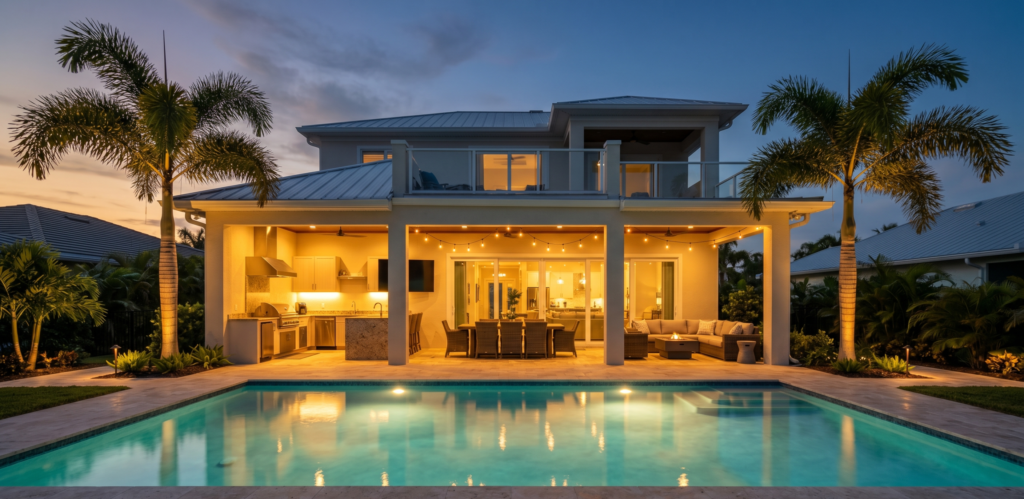
The best outdoor living spaces aren’t just collections of features scattered across your backyard. They’re thoughtfully designed zones that each serve a purpose and work together to create a complete outdoor environment.
A cooking zone near your indoor kitchen. A dining area with proper shade and seating. A lounging space by the pool. A gathering spot around a fire feature. When these zones are positioned well and connected naturally, your outdoor space becomes as functional and livable as the interior of your home.
Understanding how to create and connect functional zones helps you design outdoor living that actually gets used rather than just looking good in photos.
What Makes a Zone Functional
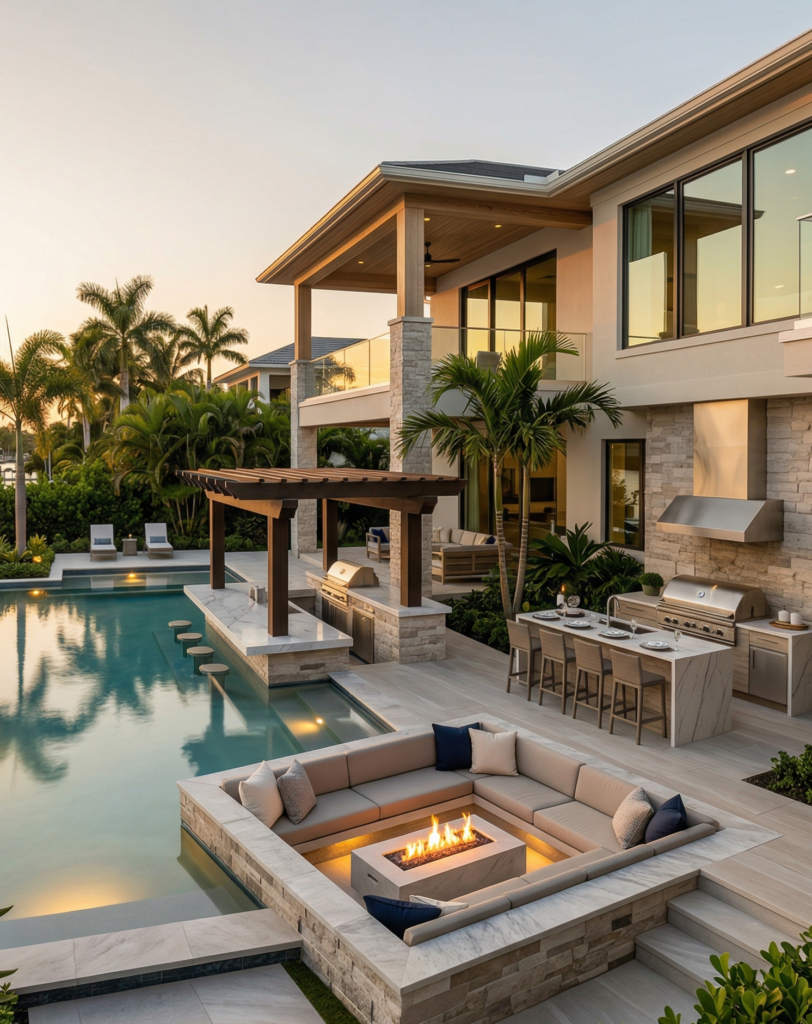
Functional zones have three characteristics: they serve a clear purpose, they’re appropriately sized and equipped for that purpose, and they’re positioned to work with adjacent zones.
Purpose-Driven Design
Each zone should answer the question “what happens here?” without ambiguity.
A cooking zone is where food preparation happens. A dining zone is where meals are eaten. A lounging zone is where people relax. A gathering zone is where groups congregate.
When zones lack clear purpose, they don’t get used. An undefined patio area with random furniture becomes wasted space because no one knows what it’s for.
Appropriate Scale
Zones should be sized for their intended use.
A dining area needs enough space for a table that seats your typical gathering size plus room to move chairs in and out comfortably. Too small feels cramped. Too large feels empty and uninviting.
A cooking zone needs counter space, equipment room, and work area. Undersized cooking zones force you to carry things back and forth to the house constantly.
Strategic Positioning
Where zones sit in relation to each other affects how well they function together.
Your outdoor kitchen should connect easily to both indoor kitchen and outdoor dining. Your fire feature should be near seating but positioned so smoke doesn’t blow toward dining or lounging areas. Pool lounging should connect to covered patio areas for shade breaks.
The Cooking Zone
The outdoor kitchen is often the heart of outdoor living, especially in coastal Florida where cooking outside keeps heat out of your home.
Essential Elements
Primary Cooking Surface: Built-in grill is standard. Size depends on how you cook and how many people you typically feed. A 36-inch grill handles most families. Larger gatherings benefit from 42 to 48 inches or multiple cooking surfaces.
Prep Space: Countertop on both sides of the grill. Minimum 12 to 18 inches on each side. More is better. You need space to set plates, prep food, and rest utensils.
Storage: Cabinets or drawers for utensils, plates, and supplies. Without storage, you’re constantly running to the house for items you need.
Sink: Dramatically improves functionality. You can rinse vegetables, clean utensils, wash hands, and fill pots without going inside. Requires plumbing, which adds cost but transforms usability.
Refrigeration: Outdoor-rated refrigerator or ice maker keeps drinks cold and reduces trips indoors. Not essential but highly convenient for frequent entertaining.
Power: Weatherproof outlets for small appliances, phone charging, or lighting. GFCI protection is required for outdoor outlets.
Lighting: Task lighting over cooking and prep surfaces. You need to see what you’re cooking during evening use.
Positioning Considerations
Place your outdoor kitchen near your indoor kitchen. A direct path (ideally no more than 15 to 20 feet) makes transferring food, supplies, and dishes manageable.
Position the grill so the cook faces the gathering rather than a wall. This keeps the cook involved in conversation and allows monitoring of guests.
Consider prevailing winds. You don’t want smoke constantly blowing toward dining or seating areas. In coastal Florida, afternoon breezes typically come from the southwest. Position cooking accordingly.
Provide shade over the cooking area if possible. Cooking in direct Florida sun is uncomfortable. A pergola or covered structure makes the space usable throughout the day.
The Dining Zone
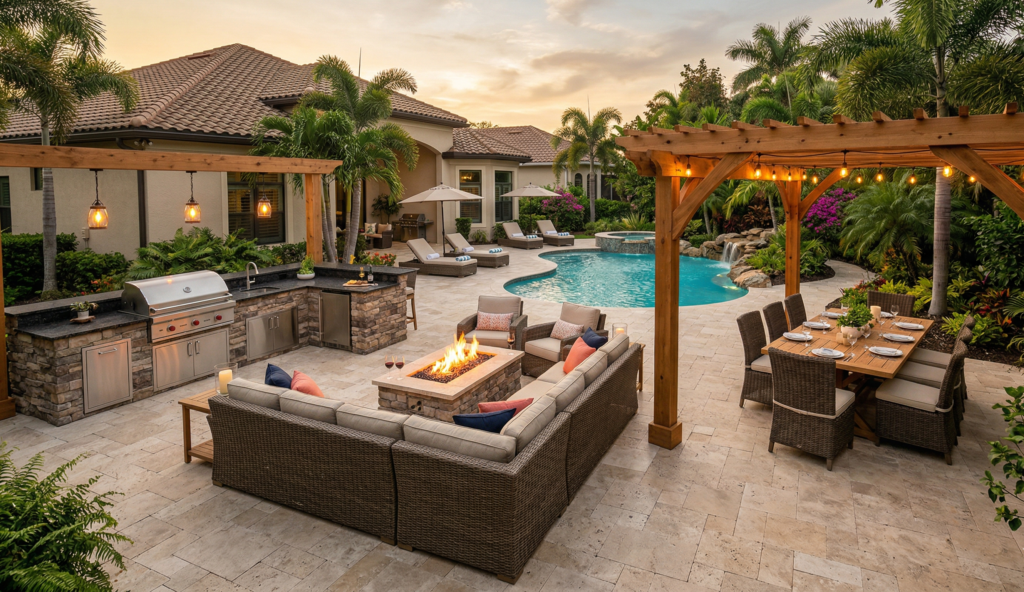
Outdoor dining extends your living space and changes how you entertain.
Essential Elements
Table and Seating: Size your table for typical gatherings, not your largest party. A table that seats 6 to 8 gets more regular use than one sized for 12 that feels empty most of the time.
Allow 24 to 30 inches of table space per person. Leave 36 to 42 inches of clearance around the table for chairs to pull out and people to move comfortably.
Shade: Dining in direct sun is uncomfortable in Florida. Pergolas, pavilions, covered patios, or large umbrellas all provide relief. Shade makes the space usable for lunch and afternoon gatherings, not just evening dinners.
Lighting: Overhead lighting allows comfortable dining after dark. Dimmable fixtures adjust ambiance from functional task lighting to soft evening atmosphere.
Surface: The dining area surface should be level and stable. Wobbly tables on uneven pavers frustrate diners. Proper base preparation and installation prevent this.
Proximity to Kitchen
Position dining 6 to 12 feet from your outdoor kitchen. Close enough that serving food is easy but far enough that cooking activity doesn’t interfere with diners.
If you have both indoor and outdoor kitchens, position dining centrally so both are accessible. This provides flexibility for different meal preparations.
Weather Protection
Consider prevailing weather when positioning dining. Morning sun might be pleasant, but afternoon sun in Florida is intense. Western exposure means hot afternoon and evening sun.
Rain protection from a roof or substantial pergola covering extends usability. Open-air dining works in fair weather but limits use during frequent afternoon storms.
The Lounging Zone
Lounging spaces provide comfortable seating for conversation, reading, or relaxing without the formality of dining.
Essential Elements
Comfortable Seating: Deep-seat outdoor furniture, sectionals, or lounge chairs create inviting spaces. Dining chairs don’t work for lounging. You need furniture designed for extended comfortable sitting.
Allow space for side tables. People need somewhere to set drinks, phones, or books.
Shade Options: Pergolas, umbrellas, or natural shade from trees make lounging comfortable during the day. Without shade, lounging areas in Florida are only usable in early morning or evening.
Proximity to Pool
If you have a pool, position lounging near it but not right at the edge. You want easy access for swimmers taking breaks but enough distance that splashing doesn’t soak furniture.
Eight to fifteen feet from the pool edge often works well. Close enough to feel connected but far enough to stay dry.
Privacy
Lounging areas benefit from some sense of enclosure or privacy. Strategic plantings, low walls, or positioning that faces away from neighbors all help.
People relax more easily when they don’t feel on display.
Multiple Lounging Areas
Consider creating more than one lounging zone if space allows. A poolside area for swimmers. A covered patio lounge for shade. A quiet corner away from activity.
Different spaces serve different moods and allow your outdoor area to accommodate varied activities simultaneously.
The Gathering Zone
Gathering spaces create focal points where groups naturally congregate.
Fire Features as Anchors
Fire pits, fire bowls, and outdoor fireplaces create natural gathering spots. Even in Florida’s warm climate, fire features add ambiance and draw people together.
Position fire features with built-in or arranged seating around them. Circular or semi-circular arrangements encourage conversation and create defined gathering space.
Allow 6 to 8 feet from fire to seating for safety and comfort. Too close is uncomfortably hot. Too far loses the connection to the fire.
Seating Arrangement
Gathering zones need seating that promotes conversation. Face seating inward toward a focal point (fire feature, view, or central area) rather than in rows or lines.
Built-in benches, curved seating arrangements, or grouped furniture all work better than straight lines.
Size and Capacity
Size gathering zones for your typical group plus a few extra. If you regularly host 8 to 10 people, plan for 12 to 15 seats. This accommodates most gatherings without creating empty unused space.
For larger occasional parties, supplemental seating can be brought in. Don’t design for your once-a-year party at the expense of daily usability.
Integration with Other Zones
Gathering zones should connect to but not interfere with other areas. Position them adjacent to lounging or dining zones so people can move between activities naturally.
They shouldn’t block circulation paths between kitchen, dining, and pool.
Pool-Adjacent Zones
If your outdoor living includes a pool, specific zones relate to pool use.
Lounging at the Pool
Deck space with chaise lounges or pool furniture provides places for swimmers to relax between dips.
This zone needs to be right at the pool edge, allowing wet swimmers to use it comfortably.
Shade Breaks
Not all pool lounging should be in full sun. Provide shaded areas where swimmers can cool down without leaving the pool area entirely.
Umbrellas, shade structures, or covered patio edges that extend close to the pool all work.
Towel and Supply Storage
Convenient storage for towels, sunscreen, toys, and pool supplies keeps the area organized. Built-in storage in outdoor kitchens or dedicated cabinets both work.
Connecting Zones
Zones shouldn’t feel isolated. They need to work together as one outdoor environment.
Circulation Paths
Clear pathways between zones allow easy movement. These don’t need to be formal walkways but should be obvious and unobstructed.
Avoid designs where reaching one zone requires walking through another inappropriately (cutting through lounging area to reach kitchen, walking through dining space to access pool).
Visual Connections
Even when zones are separated by distance or plantings, they should feel connected visually. Consistent materials, coordinated colors, and thoughtful landscaping all help.
You should see how zones relate even when standing in one and looking toward others.
Material Continuity
Using the same or coordinated materials across zones creates visual unity. The same pavers extending from kitchen through dining to pool area make everything feel connected.
Abrupt material changes create visual separation that can make zones feel disjointed.
Lighting Integration
Consistent lighting approach across zones creates cohesion at night. Similar fixture styles, coordinated color temperatures, and integrated control all help.
Each zone can have appropriate lighting for its function while still feeling part of the whole.
Common Zoning Mistakes
Several design errors break functional zone design.
Zones Too Small
Undersized zones feel cramped and don’t serve their purpose well. A cooking area without adequate prep space forces constant trips to the house. A dining area where chairs bump into planters or walls frustrates diners.
Allow more space than minimum requirements suggest. Generous zones feel comfortable and inviting.
Poor Sequence
Zones positioned in illogical sequence create awkward circulation. Kitchen far from dining. Fire pit requiring walking through kitchen to access. Pool furniture blocking the path to outdoor kitchen.
Think through typical use patterns and position zones to support natural flow.
Ignoring Sun and Wind
Positioning zones without considering sun exposure and prevailing winds creates uncomfortable spaces.
Cooking zones in full afternoon sun. Dining areas facing west into setting sun. Fire pits where smoke blows constantly toward seating.
Understand your site’s conditions and design accordingly.
No Shade
Outdoor spaces in Florida need shade to be usable during the day. Zones designed without shade consideration become afternoon dead zones that only work at dawn and dusk.
Forgetting Circulation
Zones positioned without clear paths between them force awkward movement. Reaching one zone shouldn’t require cutting through another or taking circuitous routes.
Adapting to Your Property
Not every property can accommodate all zones in ideal configuration. Work with what you have.
Small Properties
Combine zones where necessary. A cooking and dining area can share space with smart design. Lounging can double as gathering when furniture is arranged around a fire feature.
Vertical elements (pergolas, plantings) create definition without consuming space.
Large Properties
More space allows separation of zones and creation of multiple lounging or gathering areas for different purposes.
The challenge is keeping zones connected so your outdoor area doesn’t feel fragmented.
Challenging Shapes
Irregular or narrow lots require creative zone placement. Long narrow yards might arrange zones in sequence along the length. L-shaped yards can place different zones in different legs.
Frequently Asked Questions
How much space do I need for each outdoor living zone?
A functional outdoor kitchen needs 8-12 linear feet of counter space minimum. Dining zones need the table size plus 36-42 inches clearance on all sides. Lounging zones need enough space for furniture plus 3-4 feet of circulation around seating. Gathering zones around fire features need 12-15 feet diameter for comfortable seating arrangement.
Should my outdoor kitchen face the house or the yard?
Position the grill so the cook faces toward where guests gather, not a wall. This keeps the cook engaged in conversation and allows monitoring of the space. The kitchen itself should be within 15-20 feet of your indoor kitchen for easy material transfer.
How do I position zones to deal with Florida’s afternoon sun?
Provide shade structures (pergolas, pavilions, umbrellas) over dining and lounging zones. Position cooking zones so afternoon sun doesn’t make them unusable. East-facing areas get morning sun but afternoon shade. West-facing areas are hot in afternoon and evening. Consider prevailing southwest breezes when positioning fire features and cooking areas.
Can zones overlap or do they need to be separate?
Zones can overlap in smaller spaces. A dining area can transition into lounging with furniture arrangement. Gathering zones often blend with lounging zones. The key is that each zone still serves its primary purpose effectively even when sharing space.
How close should outdoor dining be to the outdoor kitchen?
Position dining 6-12 feet from your outdoor kitchen. Close enough that serving food is convenient but far enough that cooking activity doesn’t interfere with diners. If you have both indoor and outdoor kitchens, center the dining area between them.
Do I need multiple lounging areas?
If space allows, multiple lounging zones serve different purposes poolside for swimmers, covered patio for shade, quiet corners for reading. This allows varied activities simultaneously. In smaller spaces, one well-designed lounging zone that serves multiple purposes works fine.
How do I connect zones without them feeling disjointed?
Use consistent materials (same pavers throughout), coordinated lighting fixtures, continuous landscaping elements, and clear circulation paths. Visual connections matter you should see how zones relate even when standing in one area.
What’s the biggest mistake in outdoor zone design?
Making zones too small. Undersized cooking areas lack prep space. Cramped dining feels uncomfortable. Tight lounging doesn’t invite relaxation. Allow generous space outdoor areas need more room than equivalent indoor spaces to feel comfortable.
Ready to Design Your Outdoor Living Zones?
If you’re planning outdoor living spaces in Naples, Fort Myers, Sanibel, or Captiva, we can help you create functional zones that work together seamlessly.
Call us at (239) 437-3636 to schedule a consultation where we’ll discuss your property, how you want to use your outdoor space, and how to design zones that serve your lifestyle.
Coastal Custom Pool & Spa designs complete outdoor living zones across Southwest Florida. See our work in Estero, Bonita Springs, and Fort Myers, or explore our full range of outdoor living services. Book a consultation to start planning your space.
Over 30 years designing outdoor living spaces in coastal Florida. We understand how zones should relate and how to position them for our climate.