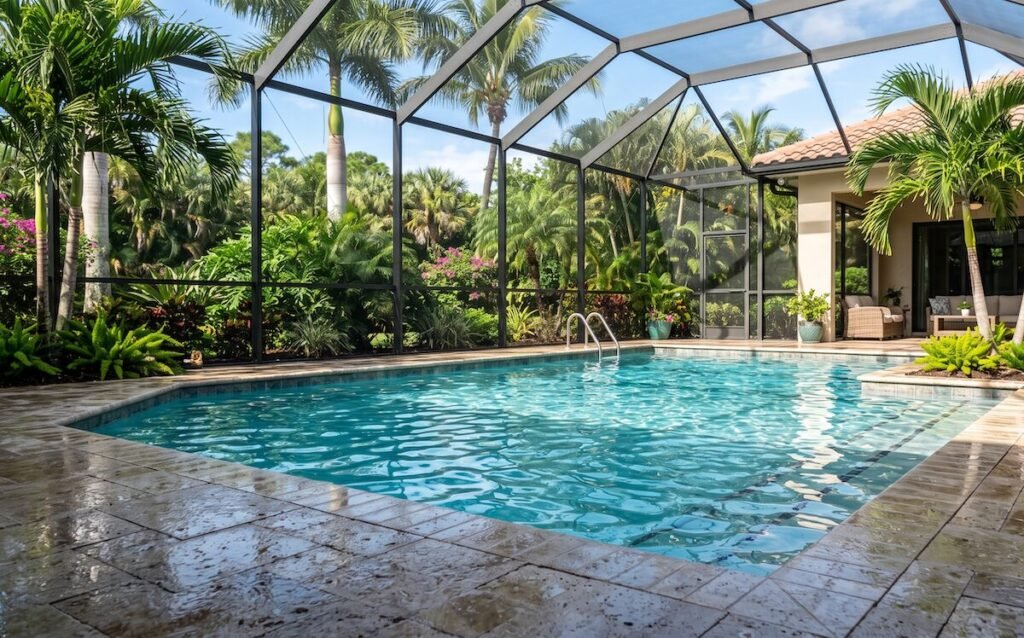
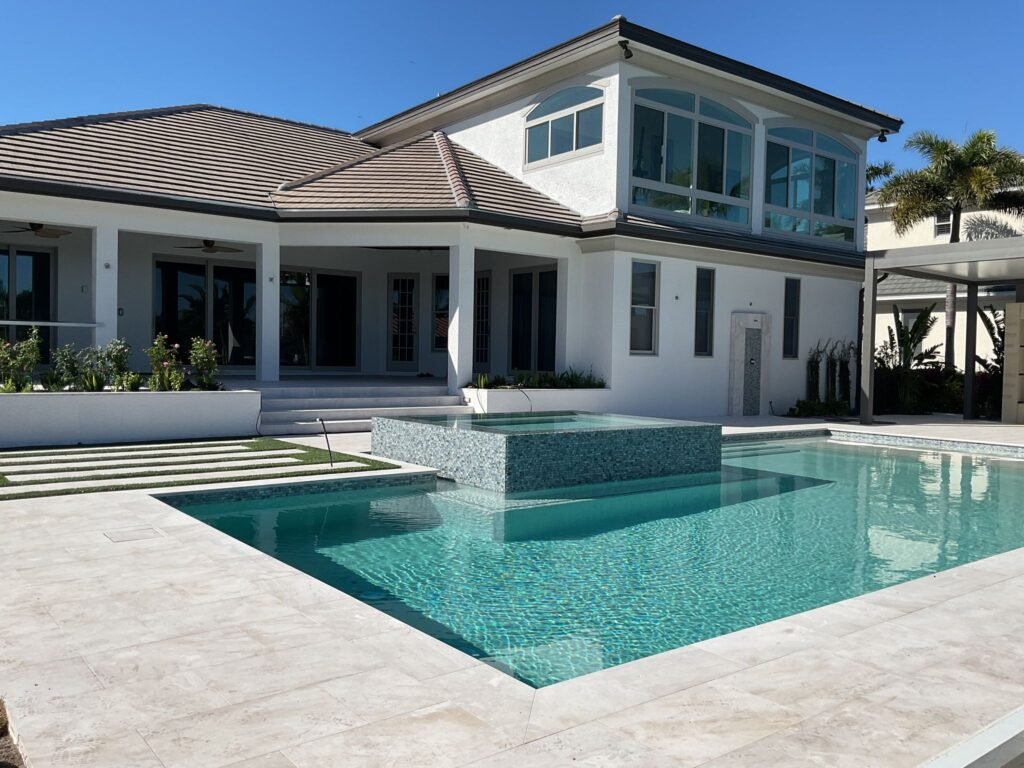
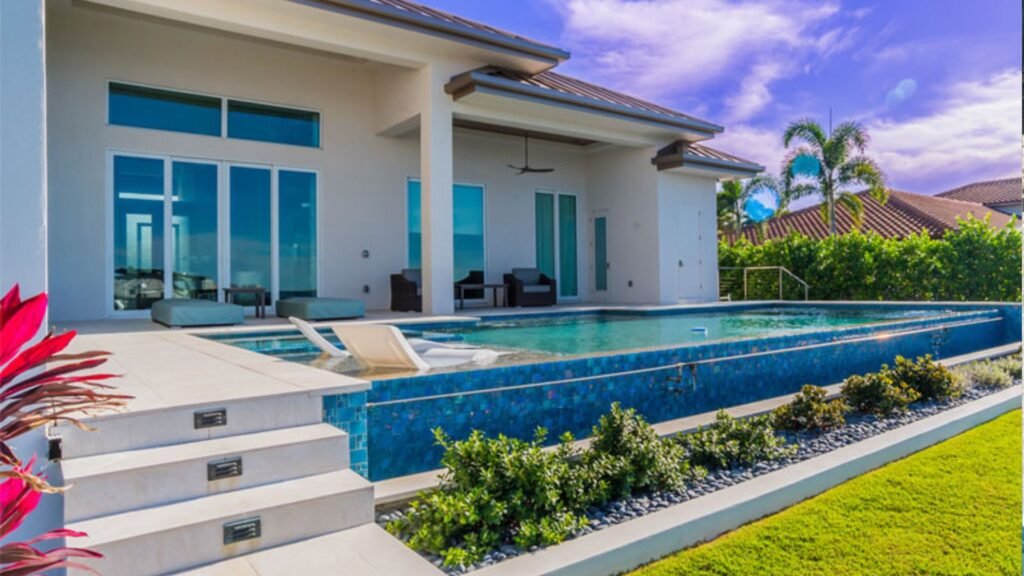
The single most important rule of hurricane pool prep is simple: do not drain your pool. A full pool is heavier, more stable, and far safer than an empty one. Florida’s hurricane season runs June 1 to November 30, so it is worth knowing how to get your pool ready before a storm and back to normal after.
Here is what the Florida Swimming Pool Association and University of Florida recommend, in plain terms.
Should you drain your pool before a hurricane?
No. Draining a pool before a storm is one of the costliest mistakes a homeowner can make. Southwest Florida sits on a high water table, and when the ground saturates, an empty shell can lift, crack, or pop out of the ground. The weight of the water is what holds the pool in place.
If you are worried about heavy rain overflowing the pool, you can lower the water level by about a foot to leave room. Never empty it completely.
How do you prepare your pool equipment for a storm?
Your equipment is the most vulnerable part of the system in high wind and flooding. Before the storm:
- Shut off power to the pump, heater, and filter at the breaker.
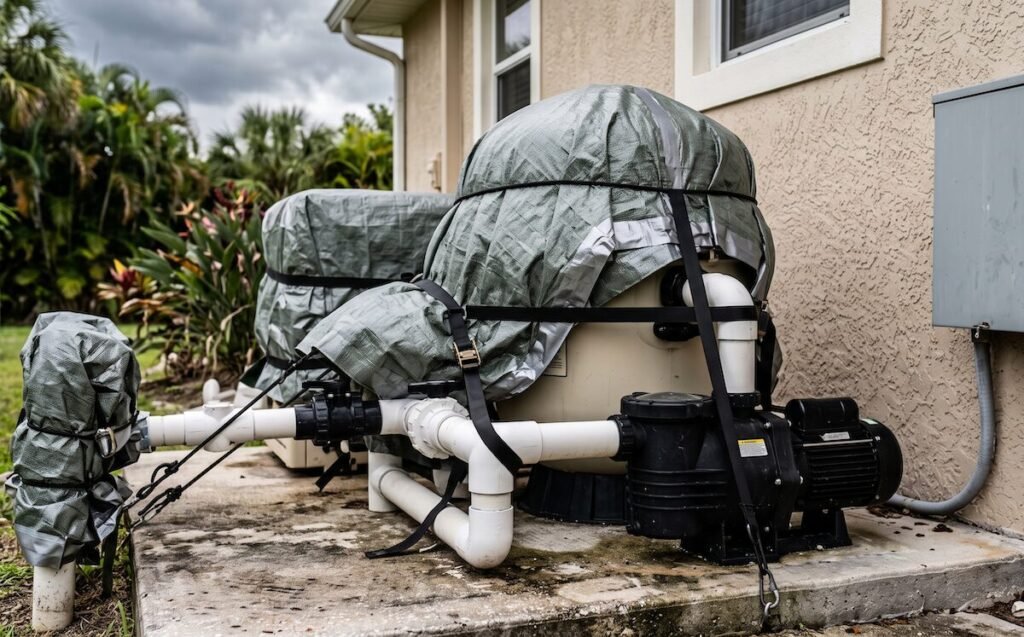
- Cover or wrap the pump and motor, and move portable items like robotic cleaners indoors.
- Super-chlorinate (shock) the water beforehand, so it stays clean if a power outage stops the pump for a few days.
- Store pool chemicals indoors, above the flood line, and keep them separated from one another.
What about your screen enclosure or pool cage?
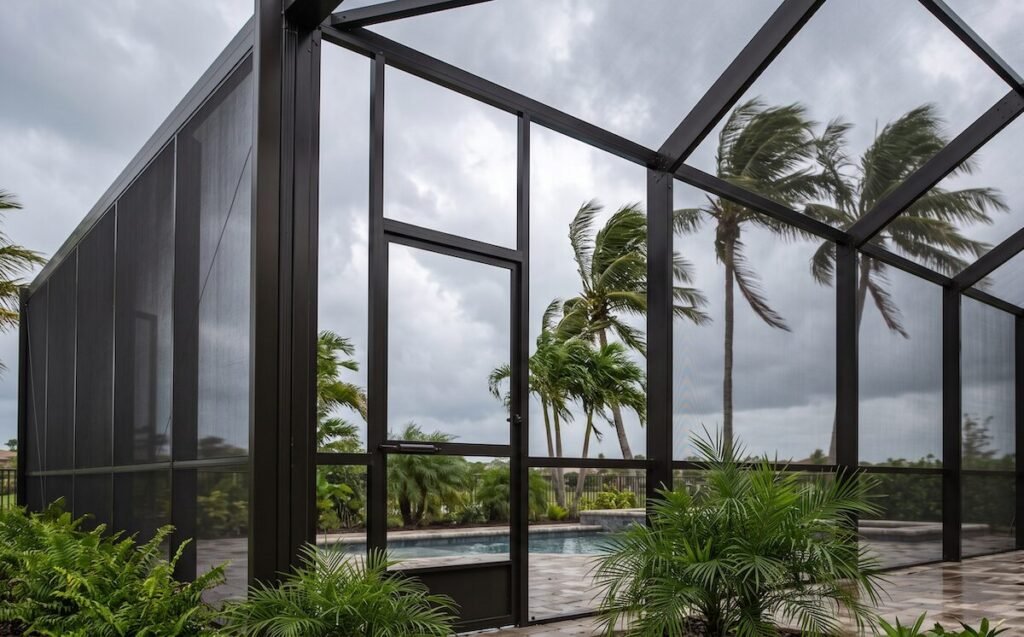
A pool cage is an engineered structure, and keeping its panels and hardware maintained before the season helps it stand up to wind. Some homeowners remove a panel or two so wind can pass through rather than push against the whole cage. Check what your enclosure and any warranty allow before doing this. Our screen enclosure guide covers how these structures are built.
What should you do with pool furniture and loose items?
Bring patio furniture, toys, and loose items indoors, or secure them well. Despite a common myth, you should not throw furniture into the pool. It can stain or scratch the finish, and items can still shift around in rising water.
What do you do after the storm?
Leave the water in the pool. Once power is safe to restore and the equipment is dry, turn it back on, skim and remove debris, run the filter, and rebalance the water chemistry.
If you suspect saltwater intrusion from storm surge or any structural damage, talk to a professional before draining anything. Draining a saturated pool incorrectly is how a fixable situation becomes a total loss.
Frequently asked questions
Should I drain my pool before a hurricane?
No. An empty pool can float and pop out of the saturated ground. Keep it full, and lower it by about a foot only if you want room for heavy rain.
How much water should I leave in my pool?
Keep it at or near its normal level. If you expect very heavy rain, lower it by roughly a foot, but never empty it.
Should I turn off my pool pump during a hurricane?
Yes. Shut off power to the pump and equipment at the breaker, and cover or wrap the pump and motor.
Is it safe to swim after a hurricane?
Not until the water has been cleared of debris, the equipment is running, and the chemistry has been rebalanced.
Ready to talk it through?
If a storm has damaged your pool, deck, or screen enclosure, our team can assess it and restore it. Schedule a consultation.