Pool renovation costs vary widely. A basic surface refresh might cost $10,000 to $15,000. A comprehensive renovation will easily exceed $50,000 and more. Understanding what drives these costs helps you budget accurately and make informed decisions about scope.
The challenge is that “pool renovation” can mean many different things. Resurfacing alone is very different from replacing tile, coping, equipment, deck and screen simultaneously. Your specific pool’s condition, the materials you choose, and the work required all affect final investment.
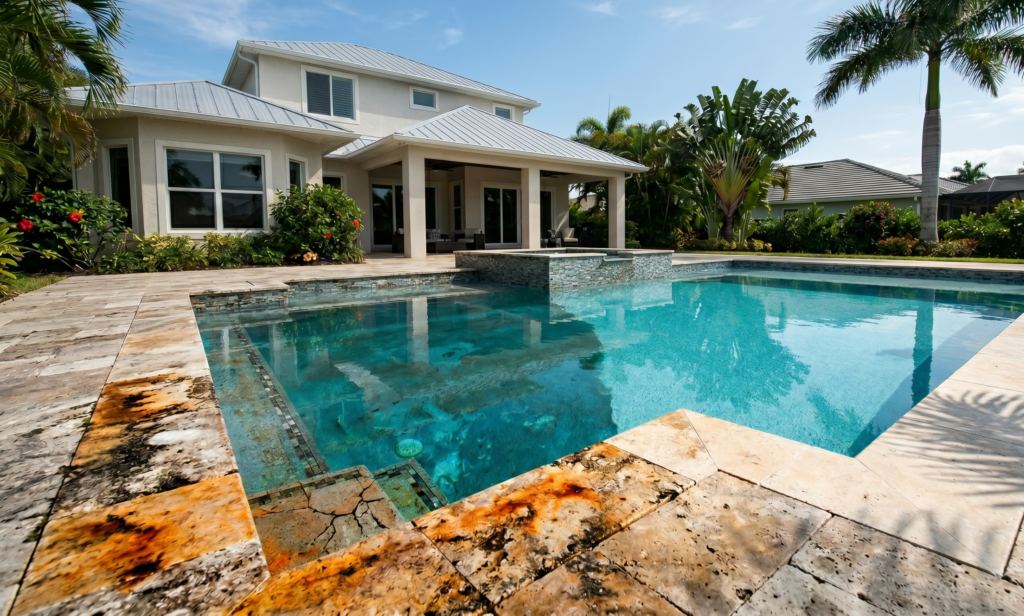
This guide breaks down what affects renovation costs so you can plan your budget realistically.
Scope of Work
What you’re renovating is the biggest cost driver.
Surface-Only Renovation
Replastering or resurfacing your pool’s interior without other changes is the most economical renovation.
Typical Cost Range:
- $10,000 onwards for standard plaster
- $12,000 to $18,000 for pebble or aggregate finishes
- $16,000 to $25,000+ for premium glass bead finishes
These ranges vary based on pool size and surface preparation requirements.
Surface, Tile, and Coping
Adding new waterline tile and coping to surface work creates a complete aesthetic refresh.
Additional Cost: $4,000 to $15,000+ depending on materials chosen
Total investment for surface, tile, and coping typically ranges from $12,000 to $35,000+ depending on materials and pool size.
Equipment Upgrades
Replacing pumps, heaters, filters, or adding automation adds to renovation cost.
Equipment Costs:
- Pump replacement: $800 to $1,800 installed
- Heater replacement: $5,200 onwards installed
- Filter replacement: $800 to $2,000 installed
- Automation system: $1,500 to $5,000+ installed
- Salt system: $1,500 to $3,000 installed
Deck Work
Deck resurfacing, repair, or replacement can equal or exceed the cost of the pool work itself.
Deck Costs:
- Concrete resurfacing: $3 to $8 per square foot
- Paver overlay: $8 to $18 per square foot
- Complete deck replacement: $10 to $25+ per square foot
For a typical 600 to 800 square foot deck area, this translates to $5,000 to $20,000+ depending on approach and materials. This also depends on the sub-deck and whether the pavers utilized are sand set or mud (concrete) set.
Plumbing Repairs
If your renovation includes fixing leaks or replacing underground plumbing, costs increase significantly.
Plumbing repairs vary widely based on extent and accessibility. Minor repairs might add $500 to $2,000. Extensive plumbing replacement can add $5,000 to $15,000+ if excavation under decking is required.
Pool Size
Larger pools cost more to renovate than smaller pools. This is straightforward but worth quantifying.
Surface Area:
Most renovation costs scale with surface area. More square footage means more plaster, more tile, more coping, and more labor.
A small pool (400 square feet of surface area) costs significantly less to resurface than a large pool (800+ square feet).
Linear Footage:
Tile and coping are priced per linear foot around the pool’s perimeter. Larger pools have more perimeter, which directly increases these costs.
Water Volume:
Larger pools require bigger equipment (pumps, filters, heaters) which costs more than equipment for smaller pools.
Current Condition
Your pool’s existing condition affects how much preparation is required.
Shell Condition
Pools with extensive cracking require repair before resurfacing. This adds labor and materials.
Minor surface cracks are addressed as part of standard surface prep. Structural cracks requiring epoxy injection, patching, or reinforcement add $500 to $3,000+ depending on severity.
If your shell has significant structural issues, costs can escalate considerably. In extreme cases, the cost approaches new construction, making replacement worth considering.
Tile and Coping Removal
If existing tile and coping come off easily, removal is straightforward. If they’re well-bonded or difficult to remove without damaging the shell, removal takes more time and care.
Difficult removals add labor costs.
Plumbing Condition
If plumbing is sound, no additional costs. If leaks exist or repairs are needed, budget for detection ($300 to $800) and repairs ($500 to $5,000+ depending on extent).
Deck Condition
If the deck is in good condition, minor cleaning or light resurfacing might suffice. If the deck has settlement, major cracking, or structural problems, more extensive (and expensive) work is required.
Material Choices
Materials affect both appearance and cost significantly.
Surface Finishes
- Standard white plaster: $7 plus per square foot
- Colored plaster: $9 plus per square foot
- Pebble finishes: $12 plus per square foot
- Quartz finishes: $15 plus per square foot
- Glass bead finishes: $20 plus per square foot
The difference between basic plaster and premium glass finish can be $10,000 to $20,000 on a typical pool.
Tile
- Standard ceramic tile: $8 to $15 per square foot installed
- Premium ceramic or porcelain: $12 to $25 per square foot installed
- Glass tile: $20 to $50+ per square foot installed
Tile costs vary based on material, size, and whether you’re using standard field tile or custom patterns and borders.
Coping
- Poured concrete: $15 to $20 per linear foot
- Precast concrete: $20 to $25 per linear foot
- Travertine: $25 to $30 or so per linear foot
- Natural stone: $30 to $40+ per linear foot
For a pool with 90 linear feet of perimeter, coping costs range from $1,500 for basic concrete to $4,000+ for premium natural stone.
Equipment
Equipment costs vary by brand, capacity, and features.
Budget-conscious equipment choices save money upfront but may cost more long-term through higher operating costs or shorter lifespans.
Premium, high-efficiency equipment costs more initially but often pays for itself through energy savings and longer service life.
Deck Materials
Deck material choices affect costs dramatically.
Resurfacing existing concrete is the most economical. Travertine or porcelain pavers cost more. Natural stone is premium pricing.
Labor and Installation
Labor represents a significant portion of renovation costs.
Surface Prep and Application:
Proper surface preparation takes time and skill. Crews that rush produce work that fails prematurely.
Labor for surface work (prep, application, and finishing) typically represents 40% to 50% of total surface renovation cost.
Tile and Coping Installation:
Tile setting requires precision and experience. Level tile lines, consistent grout spacing, and proper adhesive application all affect appearance and longevity.
Skilled tile setters cost more per hour but produce work that lasts and looks professional.
Equipment Installation:
Equipment replacement labor is relatively straightforward but requires licensed electricians for electrical work and proper plumbing connections.
Deck Work:
Deck installation labor varies based on approach. Pouring concrete, setting pavers, or installing natural stone all require different skills and time commitments.
Location and Access
Your property’s specifics affect renovation costs.
Access:
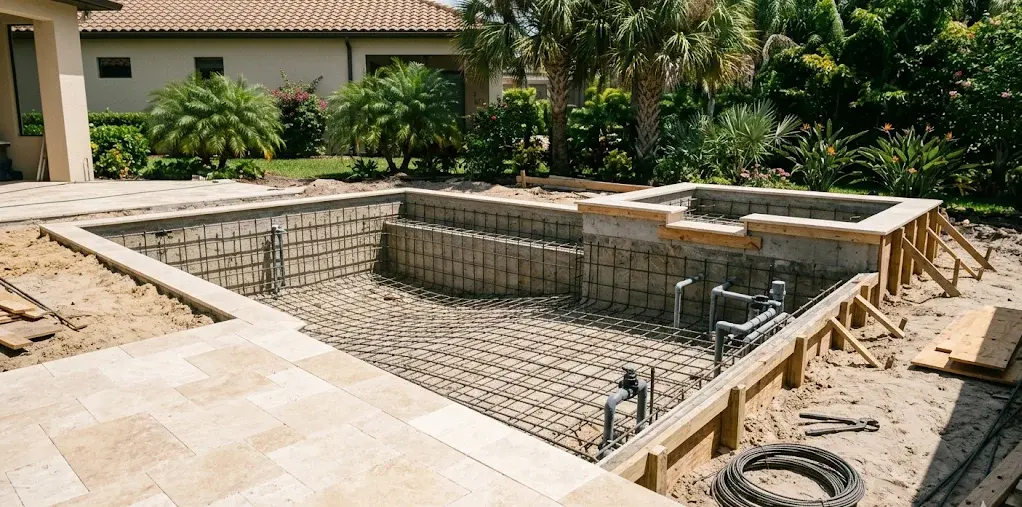
Easy access for equipment, materials, and debris removal keeps costs lower. Difficult access (narrow gates, limited pathways, long distances from driveway to pool) adds labor and time.
If equipment must be carried or materials transported long distances, expect higher costs.
Disposal:
Old plaster, tile, coping, and deck material must be removed and disposed of. Disposal costs vary by location and volume.
Properties that require longer hauls to disposal facilities incur higher costs.
Site Conditions:
Clean, organized work areas are easier to work in than sites with obstacles, landscaping that must be protected, or structures that complicate access.
Water Source:
Filling your pool after renovation requires water. Municipal water works but can cost $200 to $500+ depending on pool size and local rates.
Some homeowners use well water or arrange water delivery, which has different cost considerations.
Permits and Inspections
Most surface renovations don’t require permits. However, significant work sometimes does.
When Permits Are Required:
- Electrical work typically requires permits
- Plumbing work often requires permits
- Structural modifications definitely require permits
- Adding new equipment or features may require permits depending on scope
Permit Costs:
Permit fees vary by municipality but typically range from $500 to 2,000+ depending on scope of work.
Permitted work requires inspections, which can add time to your project but ensures code compliance.
Additional Considerations
Other factors can affect total renovation investment.
Lighting Upgrades:
Replacing old incandescent pool lights with LED provides better illumination, color options, and energy savings.
Water Feature Repairs:
If your pool has waterfalls, fountains, or other water features that need repair or updating, factor these costs.
Water feature work varies widely based on complexity and extent of issues.
Landscaping:
Renovation often impacts surrounding landscaping. Plants may need trimming or temporary removal. Some homeowners use renovation as an opportunity to update landscape plantings.
Furniture and Accessories:
New pool equipment, cleaning tools, or accessories add to overall investment.
Startup Chemicals:
New surfaces require specific start-up chemicals and water balancing. Budget $200 to $500 for initial chemical needs.
Getting Accurate Estimates
Understanding costs requires detailed estimates from qualified contractors.
What Good Estimates Include:
- Complete scope of work description
- Breakdown of materials and labor costs
- Specifications for materials (surface type, tile selection, equipment models)
- Timeline expectations
- Payment schedule
- Warranty information
What to Avoid:
- Vague line items without detail
- Estimates that don’t specify materials or brands
- Verbal estimates without written documentation
- Prices that seem too good to be true
Getting Multiple Estimates:
Obtain estimates from at least three qualified contractors. Ensure all estimates cover the same scope so you’re comparing accurately.
Don’t automatically choose the lowest bid. Extremely low estimates often indicate shortcuts, inferior materials, or contractors who underbid and later add charges.
Budgeting Strategy
Plan your renovation budget thoughtfully.
Start With Scope:
Decide what work your pool actually needs versus what would be nice to have. Prioritize essential items.
Build in Contingency:
Add 10% to 15% contingency for unexpected issues. Pools often hide problems that aren’t visible until work begins.
This buffer prevents financial stress if surprises arise.
Consider Phasing:
If budget is tight, consider phasing work. Do surface renovation now, equipment upgrades next year, and deck work later.
Phasing spreads costs over time but means multiple disruptions. It works for some homeowners and not for others.
Long-Term Value:
Sometimes spending more upfront provides better long-term value.
Pebble finishes cost more than plaster but last significantly longer, reducing cost per year of service.
Variable-speed pumps cost more than single-speed but save hundreds annually in energy costs.
Evaluate total cost of ownership, not just initial price.
Financing Options
Pool renovation is a significant investment. Financing options exist if needed.
Home Equity:
Home equity loans or lines of credit often offer the best rates for home improvement projects.
Contractor Financing:
Some contractors offer financing programs. Compare rates and terms carefully to ensure they’re competitive.
Savings:
If possible, save for renovation rather than financing. This avoids interest costs and ensures you don’t overspend beyond what you can afford.
Frequently Asked Questions
How much should I budget for a basic pool renovation?
For surface-only renovation with standard plaster, budget $8,000 to $15,000. Adding tile and coping brings the range to $12,000 to $25,000. More comprehensive renovations including equipment and deck work range from $30,000 to $60,000+.
What’s the most expensive part of pool renovation?
Deck work often equals or exceeds the cost of pool surface work. Premium surface finishes (glass bead, specialty aggregates) also add significant cost. Labor typically represents 40-50% of total renovation investment.
Can I save money by doing some work myself?
Surface application, tile setting, and equipment installation all require specialized skills and proper licensing. DIY attempts often cost more in the long run when work fails prematurely. You can save by doing your own landscaping restoration.
Why do estimates vary so much between contractors?
Estimates vary based on materials specified, labor quality, overhead costs, and whether all necessary work is included. Very low estimates often indicate shortcuts or omitted items. Compare scope carefully, not just bottom-line price. Reputable companies have infrastructure in place to handle your project and will cost more than a one man show or a man with a truck. It really depends on what you want and what type of risk you are willing to take in renovating your pool by going with an unknown company.
Should I finance my pool renovation?
Home equity financing offers competitive rates if you need it. However, saving for renovation avoids interest costs. Consider your overall financial situation and whether monthly payments fit comfortably in your budget.
What renovation adds the most value to my pool?
Surface, tile, and coping replacement provides the most dramatic visual improvement for the investment. Equipment upgrades improve function and efficiency. Deck work impacts overall aesthetic significantly.
How can I avoid cost overruns during renovation?
Get detailed written estimates, build in 10-15% contingency for surprises, ensure your contractor inspects the pool before estimating, and choose materials before work begins rather than during the project.
Is it cheaper to renovate or replace my pool?
Renovation is almost always more economical than replacement. Only pools with severe structural damage approach replacement cost. A comprehensive renovation typically costs 50-70% less than new construction.
Ready to Plan Your Renovation Budget?
If you’re planning pool renovation in Naples, Fort Myers, Sanibel, or Captiva, we provide detailed, transparent estimates that clearly explain what’s included and what affects cost.
Call us at (239) 437-3636 to schedule a consultation where we’ll inspect your pool, discuss your goals, and provide a detailed estimate so you can budget accurately.
If you’re ready to start planning your pool renovation, explore our pool remodeling services in Naples and Fort Myers pool renovation options. You can also browse our completed projects for inspiration, or book an in-home consultation to discuss your specific goals.
Over 30 years helping homeowners make informed decisions about pool renovation. No pressure. Just honest guidance from experienced professionals.