The interior surface of your pool affects how it looks, how it feels, and how long it lasts. When your pool needs resurfacing, you’re faced with choices that impact appearance, comfort, durability, and cost.
Plaster, pebble finishes, and premium options all work in coastal climates, but they perform differently and suit different priorities. Understanding what each option offers helps you choose the surface that fits your needs and budget.
Why Pools Need Resurfacing
Pool surfaces don’t last forever. Constant water exposure, chemical treatment, UV radiation, and physical wear all take their toll over time.
Typical Surface Lifespans
- Standard plaster: 7-12 years
- Pebble finishes: 15-20 years
- Glass bead finishes: 20-30 years
These ranges vary based on water chemistry maintenance, usage, and climate conditions. Poor water chemistry accelerates surface degradation regardless of material.
Signs You Need Resurfacing
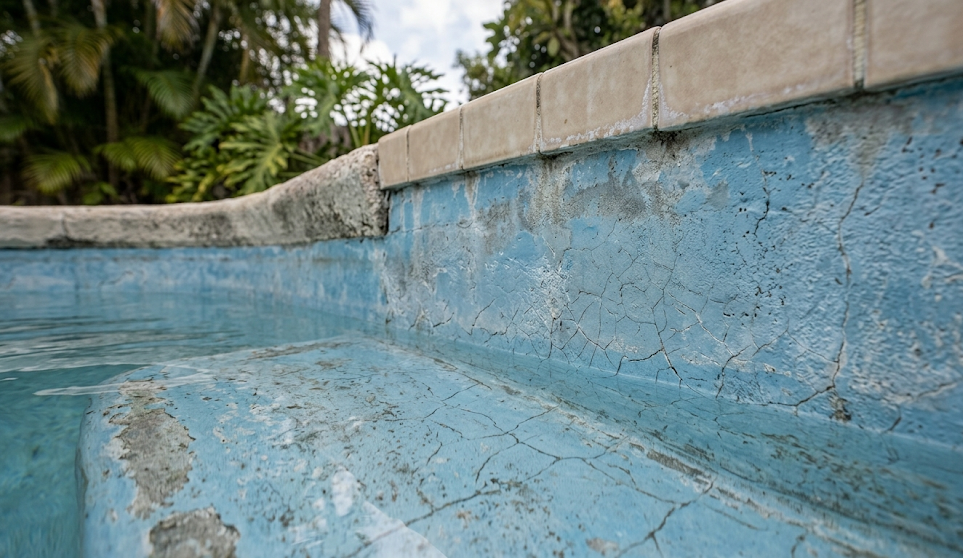
Surface roughness that’s uncomfortable to touch, visible staining that won’t clean off, widespread small cracks or crazing, plaster that’s flaking or delaminating, rough spots that snag swimwear, or visible shell showing through worn areas all indicate it’s time to resurface.
Waiting too long allows damage to extend beyond the surface into the underlying shell, which makes resurfacing more complex and expensive.
Standard White Plaster
White plaster is the most traditional and economical pool surface.
What It Is
Pool plaster is a mixture of white cement and marble dust or sand, troweled onto the shotcrete shell to create a smooth, watertight surface.
The bright white color creates classic pool aesthetics and makes water appear clear and blue.
Performance in Coastal Florida
Standard plaster performs adequately but has the shortest lifespan of common surface options.
Intense UV exposure, high temperatures, and chemical demands all stress plaster surfaces. Expect 7-10 years from standard white plaster with proper water chemistry maintenance. Poor chemistry can reduce this to 5 years or less.
Advantages
- Most affordable resurfacing option
- Smooth surface feels comfortable
- Bright white provides clean, classic appearance
- Installation completed in one day
Limitations
- Least durable option
- Susceptible to staining from metals, minerals, and organic matter
- Can be etched by aggressive water chemistry
- Surface becomes rough as it ages
- More prone to crazing (small surface cracks)
Cost
Standard white plaster typically costs $7-$10 per square foot for material and installation, not taking into account the costs to prep a pool and the post plaster start-up period.
For an average pool (15′ x 30′), this translates to roughly $10,000-$15,000 depending on pool size, access, and surface preparation needed.
Colored Plaster
Colored plaster adds tinting to standard plaster for aesthetic variation.
What It Is
Pigments are added to the plaster mix to create colors ranging from light blue and gray to deeper blues and even black.
Different colors affect how water appears. Light colors make water look turquoise or bright blue. Darker colors create deeper blue or even black water appearance.
Performance
Colored plaster performs similarly to white plaster in terms of durability and lifespan. The color itself may fade over time, particularly with darker shades.
In intense sun, darker colored plasters fade faster than lighter shades. Expect the color to mellow over the first few years.
Considerations
Darker colors absorb more heat, making the pool surface warmer. Very dark colors (charcoal, black) can make it harder to see the pool bottom clearly.
Cost
Colored plaster costs slightly more than white, typically adding $1000-$2,000 to the total resurfacing cost depending on pool size and color chosen.
Pebble Finishes (Aggregate Surfaces)
Pebble finishes combine cement with small stones or pebbles to create textured, durable surfaces.
What It Is
Small pebbles (typically 1/8″ to 3/8″ in size) are mixed into the plaster base. The surface is applied and then washed to expose the pebbles, creating a natural, textured appearance.
Pebbles can be natural river stone or manufactured glass beads in various colors, creating options from natural earth tones to vibrant blues and greens.
Performance in Coastal Florida
Pebble finishes perform exceptionally well in coastal climates. The added durability from the aggregate makes these surfaces more resistant to chemical etching, UV damage, and physical wear.
Expect 15-20 years of service life with proper maintenance. This extended lifespan often makes pebble finishes cost-effective despite higher initial cost.
Advantages
- Significantly more durable than plaster
- Texture helps hide minor staining and wear
- Natural appearance complements tropical or resort-style landscaping
- Wide range of color options
- Less susceptible to etching from water chemistry variations
Texture Considerations
Pebble finishes are rougher than smooth plaster. Most people find modern pebble finishes comfortable, but they’re definitely more textured than plaster.
The texture provides better foot traction, which some people prefer for safety. Others find it slightly less comfortable for sitting or brushing against.
If you have young children who spend a lot of time sitting in shallow areas, consider this texture factor.
Maintenance
Pebble finishes are generally lower maintenance than plaster. They’re more forgiving of water chemistry variations and less prone to visible staining.
The textured surface can harbor algae if water chemistry isn’t maintained, but proper chlorine levels prevent this.
Cost
Pebble finishes cost $10-$15 per square foot depending on pebble type and color.
For an average pool, this translates to roughly $18,000-$27,000 for resurfacing.
When evaluated over lifespan, pebble finishes often cost less per year of service than plaster despite higher upfront cost.
Quartz Finishes
Quartz finishes are similar to pebble finishes but use crushed quartz instead of river pebbles.
What It Is
Crushed quartz crystals are mixed into the surface material, creating a sparkle effect and extremely hard surface.
The result is smoother than pebble finishes but more textured than plaster, with brilliant color and light reflection.
Performance
Quartz surfaces perform similarly to pebble finishes in terms of durability, often lasting 15-20 years or more.
The quartz crystals are extremely hard, creating a very durable surface resistant to wear and chemical etching.
Advantages
- Brilliant color and sparkle effect
- Smoother than pebble finishes
- Extremely durable
- Resists staining well
- Available in many colors
Cost
Quartz finishes are priced similarly to or slightly higher than pebble options, typically $15-$20 per square foot.
Glass Bead Finishes (Premium Option)
Premium finishes using glass provide the highest durability and most vibrant colors.
What It Is
Small glass beads (similar to pebble finishes but with glass instead of stone) are mixed into the surface.
This provides much of the durability and appearance benefit of full glass tile at a fraction of the cost.
Performance
Glass bead finishes are extremely smooth, brilliantly colored, and exceptionally durable. They resist fading, staining, and chemical etching better than any other option.
Glass surfaces can last 20-30 years with proper maintenance. The glass is non-porous, preventing algae attachment and staining.
Colors remain vibrant indefinitely since glass doesn’t fade under UV exposure.
Advantages
- Maximum durability and longevity
- Brilliant color that won’t fade
- Smoothest aggregate finish available
- Minimal maintenance requirements
- Non-porous surface resists algae and staining
Cost
Premium glass bead finishes typically cost $20-$25 per square foot.
Choosing the Right Surface
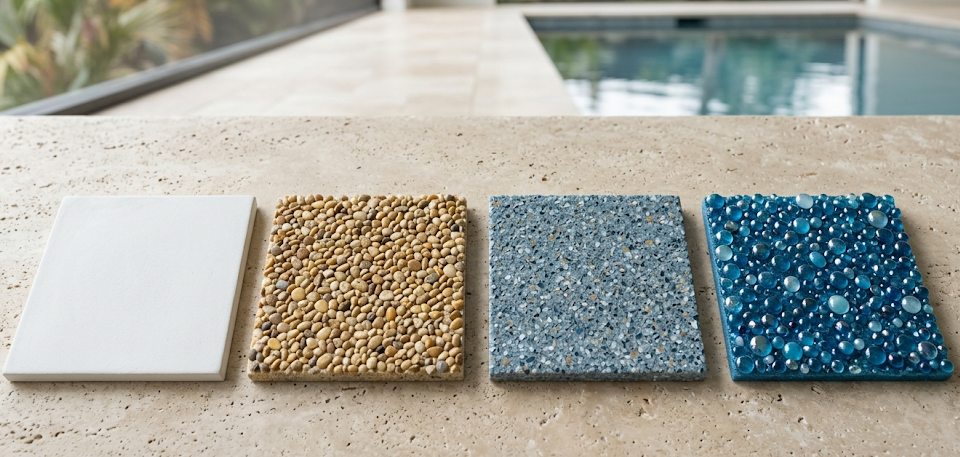
Your decision should balance aesthetics, budget, expected lifespan, and how you use your pool.
Choose Standard Plaster If:
- Budget is your primary concern
- You’re planning to sell the home within a few years
- You prefer smooth surfaces and classic white appearance
- You’re willing to maintain careful water chemistry
- You’re comfortable resurfacing more frequently
- You want a light blue water color
Choose Pebble or Quartz If:
- You want significantly longer lifespan
- You prefer lower maintenance requirements
- You like natural or textured appearance
- You want better staining resistance
- Budget allows for mid-range investment
- You’re staying in the home long-term
Choose Glass Bead Finishes If:
- You want maximum durability and longevity
- You prioritize brilliant color that won’t fade
- You want the smoothest aggregate finish available
- Budget allows for premium investment
- You want minimal maintenance requirements
Preparation and Application
Regardless of surface choice, proper preparation is critical to performance and longevity.
Surface Preparation
- Old surface must be removed
- Shell must be inspected and any cracks or damage repaired
- Surface must be properly profiled for new material to bond
- All dust and debris must be removed
- Waterproofing must be added
Skipping thorough preparation causes new surface to fail prematurely.
Application and Curing
The entire surface should be applied in a single day to avoid cold joints. The pool must be filled immediately after surface application. Water chemistry must be carefully managed during initial curing period (typically 28 days).
Water Chemistry and Surface Longevity
Regardless of surface choice, water chemistry directly affects lifespan.
Critical Factors
pH: Keep between 7.2-7.8. Low pH etches surfaces. High pH causes calcium scaling.
Alkalinity: Maintain 80-120 ppm to buffer pH and prevent swings that stress surfaces.
Calcium Hardness: Target 200-400 ppm. Too little causes surfaces to dissolve slowly. Too much causes scaling.
Chlorine: Maintain 1-3 ppm for sanitation without bleaching colored surfaces.
Professional Start-Up
New surfaces require specific water chemistry management during the first month. Follow start-up instructions carefully. Mistakes during this period can permanently affect surface appearance and longevity.
Frequently Asked Questions
How long does pool plaster last in Florida?
Standard white plaster typically lasts 7-10 years in coastal Florida with proper water chemistry maintenance. Poor chemistry can reduce this to 5 years or less. Pebble and quartz finishes last 15-20 years, while glass bead finishes can last 20-30 years.
Is pebble finish worth the extra cost?
Pebble finishes cost nearly double plaster upfront but last twice as long or more. Over the surface’s lifespan, pebble often costs less per year than plaster. If you’re staying in your home long-term, pebble finishes typically provide better value and require less frequent resurfacing.
Can I change from plaster to pebble when resurfacing?
Yes. When resurfacing, you can switch from any surface type to any other. The old surface is completely removed, the shell is prepared, and your new surface choice is applied. This is the ideal time to upgrade to a more durable finish.
How much does it cost to resurface a pool?
Resurfacing costs vary by surface type and pool size. For an average pool: standard plaster $8,000-$15,000, pebble finishes $14,000-$25,000, quartz $16,000-$28,000, glass bead finishes $25,000-$40,000. Costs vary based on pool size, access, and surface preparation requirements.
What’s the smoothest pool finish?
Standard white or colored plaster is the smoothest finish. Glass bead finishes are the smoothest aggregate option (smoother than pebble or quartz). Full glass tile is extremely smooth but cost-prohibitive for most applications. If smooth texture is your priority, plaster or glass bead finishes are your best options.
How do I know when my pool needs resurfacing?
Signs include surface roughness, visible staining that won’t clean, widespread crazing (small cracks), plaster flaking or delaminating, rough spots that snag swimwear, or visible shell showing through. If your pool is 10+ years old with plaster or 15+ years old with pebble and showing these signs, plan for resurfacing soon.
Does darker plaster fade faster?
Yes. Darker colored plasters (deep blue, gray, black) fade faster than lighter colors in intense sun. Expect noticeable fading within the first few years. Pebble and glass bead finishes resist fading much better than colored plaster if maintaining consistent color is important.
Can pool resurfacing be done in summer?
Yes, but ideal conditions are moderate temperatures with low wind and no rain. Extreme heat, rain, or high winds affect application quality. Many contractors prefer fall or spring for resurfacing in Florida, but summer resurfacing is possible with proper scheduling around weather conditions.
What to Expect from Coastal Custom Pool & Spa
We’ve resurfaced pools throughout Naples, Fort Myers, Sanibel, and Captiva for over 30 years. We work with all surface types and can help you evaluate which option makes the most sense for your pool and priorities.
Our resurfacing process includes:
- Thorough surface preparation and shell inspection
- Proper removal of old surface material
- Professional application with proper curing procedures
- Start-up service and water chemistry guidance
- Clear explanations of each option’s performance and value
We help you understand the true long-term cost and value of each option, not just the upfront price.
Ready to Discuss Resurfacing Options?
Schedule a free pool inspection where we’ll evaluate your current surface, explain your options, and provide detailed estimates for each surface type.
Coastal Custom Pool & Spa handles pool resurfacing as part of our comprehensive Naples pool renovation service. We also serve homeowners in Fort Myers and Bonita Springs. Book a consultation to discuss your resurfacing options.
Call us at (239) 437-3636 or schedule your consultation online.