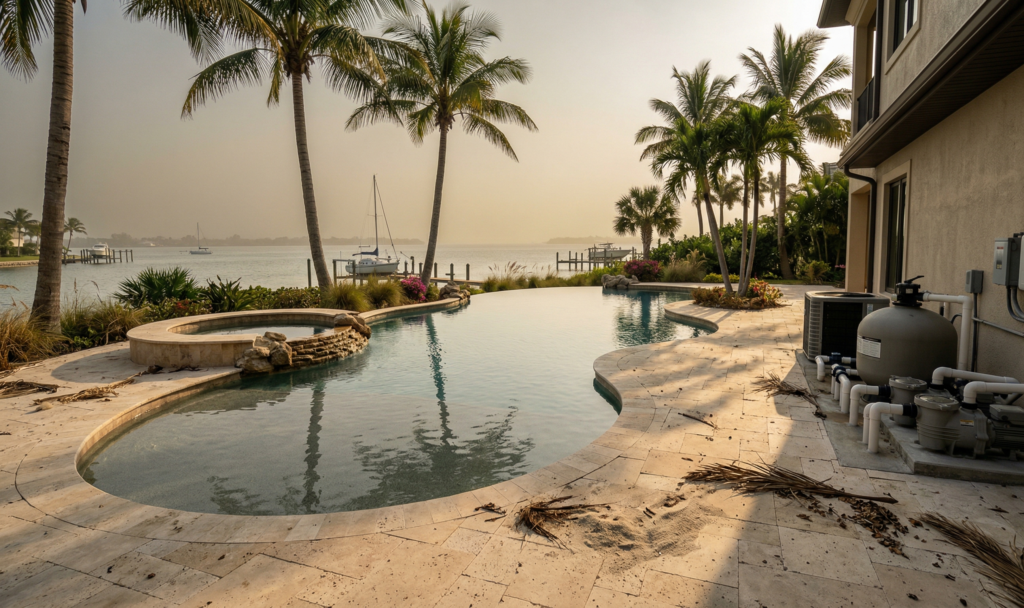
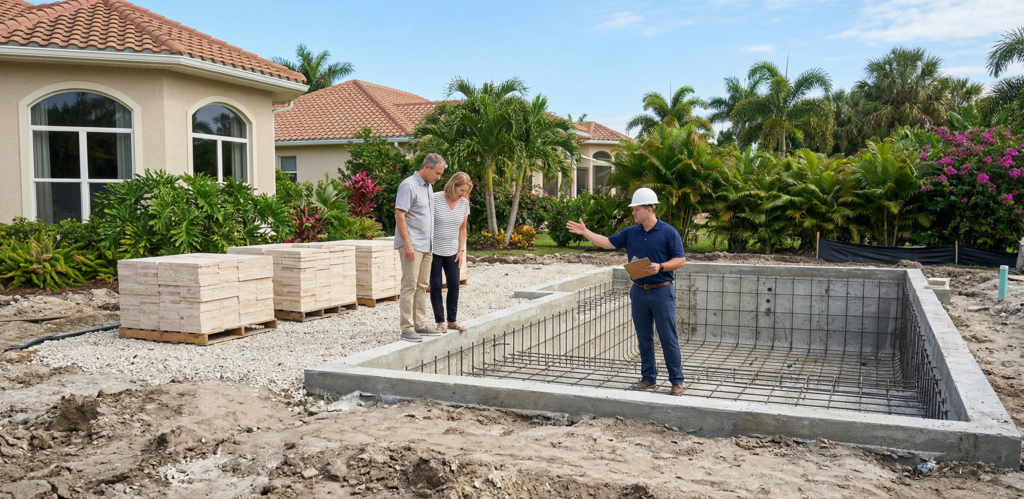
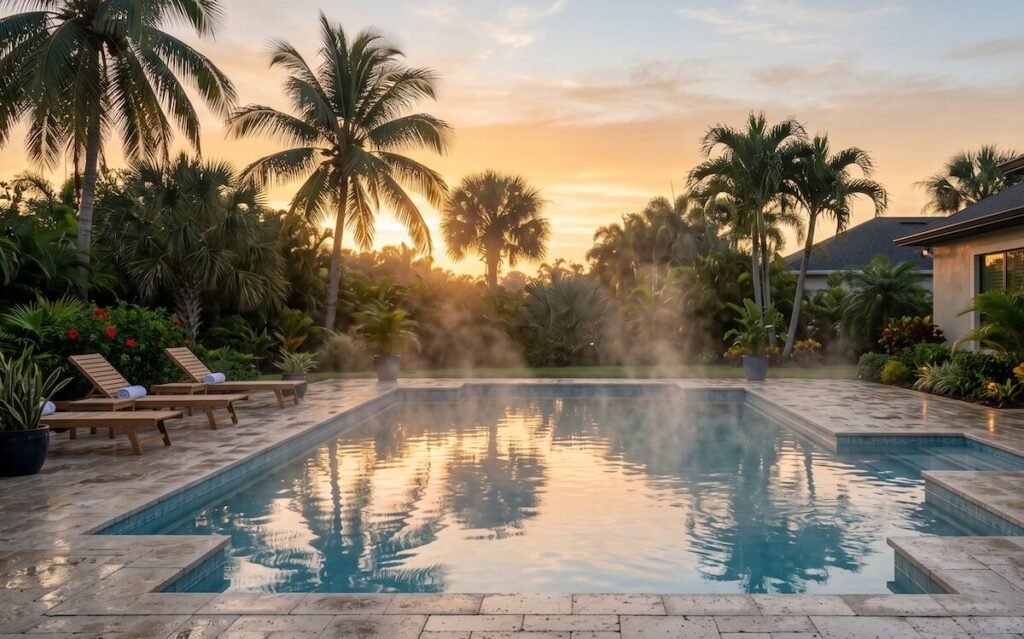
Building a pool near the water in Sanibel, Captiva or along the coast in Naples, Bonita Beach or Fort Myers Beach is fundamentally different from building one inland.
The coastal environment creates unique challenges and requirements that affect how your pool must be designed and constructed. Understanding these differences helps you plan realistically and choose a builder with the right experience.
Flood Zone Requirements (The Biggest Difference)
The most significant difference in coastal construction is flood zone designation.
FEMA maps coastal areas based on flood risk. Properties closer to the water fall into high-risk flood zones that require specific construction standards.
Base Flood Elevation (BFE)
Your flood zone determines your Base Flood Elevation, which is the height floodwaters are expected to reach during a major flood event.
Any structure, including your pool, must be built at or above this elevation.
Inland properties rarely face elevation requirements. Coastal properties almost always do. This means your pool can’t simply be dug into the ground. It must be elevated to meet BFE standards.
Meeting flood elevation requirements isn’t optional. It’s mandated by building codes, enforced through permitting, and required by insurance companies.
Elevated Pool Construction
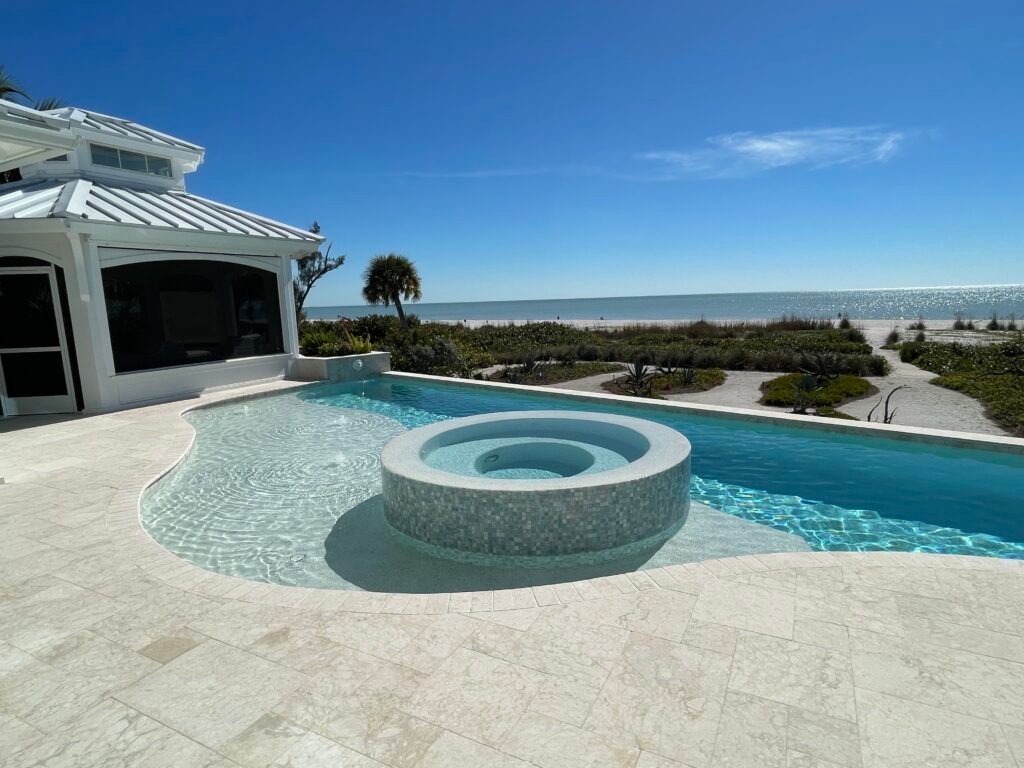
Elevated pools are built above ground level on structural support systems rather than being excavated into the earth.
How Elevated Pools Are Built
Most elevated pools in coastal Southwest Florida use pier and beam foundation systems:
- Concrete piers driven deep into the ground until they reach stable soil or bedrock
- Steel beams spanning between piers to create a framework
- Pool structure built on top of this framework
The number of piers, their depth, and structural design depend on engineering calculations based on your pool’s size, soil conditions, and required elevation.
Cost Impact
Elevated construction significantly increases project cost and complexity.
Pier installation, structural engineering, additional materials, and specialized labor can add significantly to your pool investment.
The Opportunity
Elevation creates opportunities. The space below an elevated pool can be used for:
- Storage areas
- Outdoor showers
- Equipment housing
- Covered lounging spaces
With thoughtful design elevation becomes an architectural feature.
Coastal Soil and Water Table Challenges
Sandy Soil
Coastal sandy soil has limited load-bearing capacity. This requires:
- Deeper piers than inland properties
- Additional support structures
- More extensive engineering
Sandy soil also shifts more easily, making proper engineering critical for long-term stability.
High Water Tables
Properties near the water often have groundwater close to the surface. This affects:
- Excavation requirements
- Drainage design
- Foundation stability
High water tables mean traditional in-ground pools would sit in groundwater, creating hydrostatic pressure that can crack shells or cause pools to “pop” out of the ground. Elevated construction solves this problem.
Erosion Concerns
Coastal properties are more susceptible to erosion from wind, rain, and storm surge. Proper site grading, drainage design, and erosion control measures are essential.
Environmental Regulations
Building near the water means navigating environmental protections.
Protected Areas
Coastal dunes, wetlands, mangroves, and sea turtle nesting areas are all protected. Construction near these areas requires:
- Environmental permits
- Species and habitat surveys
- Construction timing restrictions (nesting seasons)
- Activity limitations within specific distances
Stricter Setback Requirements
Coastal properties often have larger setback requirements than inland lots. Your pool must be set back from:
- The water
- Protected vegetation
- Property lines
These setbacks reduce the buildable area on your property.
Additional Permits
Environmental permits from county or state agencies add time and cost. These require detailed documentation showing your project won’t harm protected resources.
Wind Load and Structural Requirements
Coastal properties face higher wind loads during storms.
Pools, structures, and equipment must be engineered to withstand hurricane-force winds. This affects:
- Structural design
- Equipment anchoring
- Construction methods
Elevated structures face even greater wind exposure, requiring more robust engineering.
Equipment Protection
Pool equipment must be protected from wind and storm surge. This often means elevating equipment or housing it in protected enclosures.
Salt Air and Material Durability
The coastal environment is harsh on materials.
Corrosion Challenges
Salt air accelerates corrosion of metal components. Standard hardware and equipment don’t last in coastal environments.
Marine-grade stainless steel hardware, corrosion-resistant coatings, and proper material selection are essential. Cutting corners means frequent replacement and ongoing maintenance problems.
Material Selection Matters
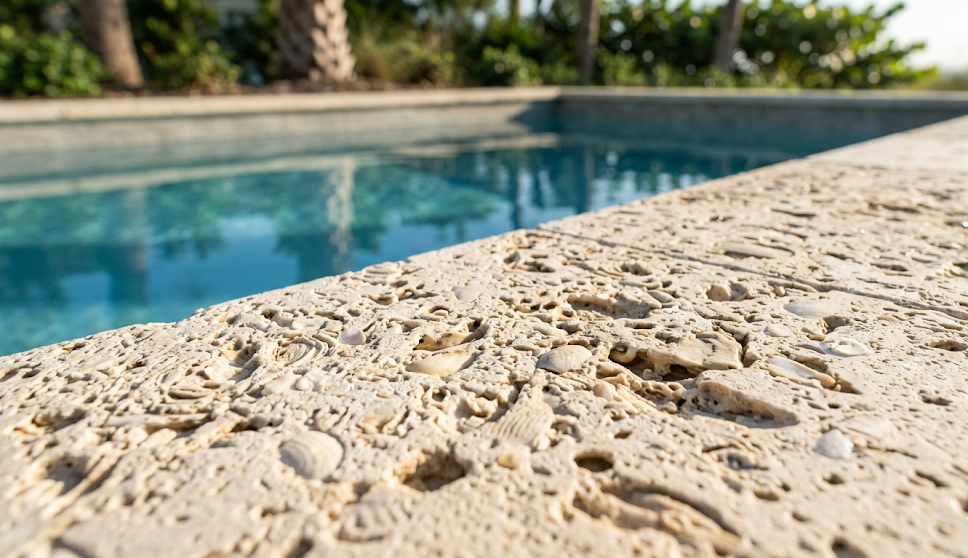
Not all pool finishes, decking materials, and equipment perform equally near the water. Materials that work well inland might fail prematurely in coastal environments.
Proven coastal materials include:
- Travertine pavers (resist salt air, stay cooler)
- Natural stone
- Properly sealed concrete
- Marine-grade equipment and hardware
Your builder should recommend materials proven to perform in Southwest Florida’s coastal climate.
Complex Permitting Process
Coastal properties face more complex permitting than inland builds.
Multiple Jurisdictions
You might need permits from:
- Your municipality
- County agencies
- State environmental departments
Each has its own requirements and review timelines.
Longer Review Times
Where an inland pool might permit in 3-4 weeks, a coastal property might take 4-6+ weeks.
Additional environmental review and stricter code requirements extend timelines.
Engineering Requirements
Most coastal pools require engineered plans by licensed engineers demonstrating:
- Flood elevation compliance
- Wind load requirements
- Structural stability
Engineering adds cost and time but is necessary for code compliance and long-term safety.
Access and Logistics
Limited Access
Beachfront properties, island locations, and gated communities sometimes have:
- Restricted access for construction equipment
- Narrow roads
- Weight restrictions on bridges
- Limited staging areas
Equipment and Materials
Getting heavy equipment, concrete trucks, and materials to remote or restricted locations requires additional planning and sometimes specialized equipment.
This adds cost and affects scheduling.
Environmental Sensitivity
Construction near protected areas must be carefully managed. This sometimes:
- Limits equipment use
- Requires hand labor for certain tasks
- Restricts work to specific times or seasons
Weather Impact
Coastal properties are more exposed to weather than inland locations.
Strong coastal winds affect construction scheduling and stop certain work (crane operations, material handling).
Summer storms are more intense near the coast, affecting work schedules more than inland areas.
Hurricane season (June through November) brings additional risk. Projects may shut down during storm threats.
The Opportunity in Coastal Construction
While coastal construction brings challenges, it also creates unique opportunities.
Enhanced Views
Elevated construction puts your pool at eye level or higher, opening up views of the Gulf, bays, or surrounding landscape that wouldn’t be visible from ground level.
Dramatic Design Possibilities
Elevation creates opportunities for:
- Infinity edges overlooking the water
- Multi-level outdoor spaces
- Integrated spa features with views
- Architectural statements that maximize your location
Truly Unique Properties
Coastal properties are inherently special. Building a pool that maximizes these properties requires expertise, but the result is a unique outdoor space that takes full advantage of your location.
Why Coastal Construction Experience Matters
Not every pool builder has experience with coastal construction.
Builders who primarily work inland don’t understand flood zone requirements, elevated construction, environmental permitting, or the unique challenges of building near the water.
What to Look For in a Coastal Builder
Local Experience: Completed projects in your specific area (Sanibel, Captiva, Naples waterfront, Fort Myers Beach)
Engineering Relationships: Regular work with qualified structural engineers who understand coastal requirements
Elevated Construction Expertise: Portfolio of completed elevated pools and pier systems
Permitting Knowledge: Familiarity with coastal permitting processes and realistic timeline expectations
Material Knowledge: Understanding of which materials perform well in salt air and sun exposure
Questions to Ask Your Builder
Before hiring a builder for a coastal property, ask:
About Experience:
- How many elevated pools have you built?
- Can I see examples of your work on beachfront or waterfront properties?
- Do you have experience with my specific municipality’s permitting process?
About Process:
- Who handles engineering for your projects?
- What materials do you recommend for coastal environments and why?
- How do you handle the unique challenges of building near the water?
The answers tell you whether your builder truly understands coastal construction or is learning on your project.
Frequently Asked Questions
How much more does an elevated pool cost than a regular pool?
Elevated pools are unique and are very different than ground level or platform pools. As a consequence the cost to build one is drastically different. Relevant costs arise from the number of piers required, pilings, columns, elevation height, soil conditions, and structure size. The exact cost depends on engineering requirements specific to your property.
Can I build a regular in-ground pool on my beachfront property?
Yes, subject to complying with a number of state and local code requirements.
How long does permitting take for a coastal pool?
Coastal pool permitting typically takes 6-10+ weeks, compared to 3-6 weeks for inland properties. The additional time accounts for environmental review, stricter code requirements, and often multiple jurisdictions involved in the approval process.
What are pier systems and why do coastal pools need them?
Pier systems use concrete piers driven deep into the ground to reach stable soil or bedrock. Steel beams span between piers to create a stable framework that supports the elevated pool structure. They’re necessary because coastal sandy soil and high water tables don’t provide adequate support for traditional construction.
Do coastal properties require elevated pools?
No they do not, but waterfront and near-water properties fall into flood zones with Base Flood Elevation requirements. Your property’s specific flood zone designation determines how to build it. A builder experienced in coastal construction can review your property’s requirements.
What materials last longest in coastal environments?
Marine-grade stainless steel hardware, travertine or natural stone decking, properly sealed concrete, and corrosion-resistant pool equipment perform best in coastal environments. Standard materials that work inland often corrode or degrade prematurely near the water due to salt air exposure.
Can I use the space under an elevated pool?
Yes. The space below elevated pools can be used for storage, outdoor showers, equipment housing, or covered lounging areas. Thoughtful design transforms the required elevation into functional outdoor living space.
Why do coastal pools cost more to maintain?
Salt air accelerates corrosion and degrades materials faster than inland environments. This means more frequent hardware replacement, additional protective coatings, and equipment that may need replacement sooner. Using proper marine-grade materials from the start reduces long-term maintenance costs.
What to Expect from Coastal Custom Pool & Spa
We’ve built pools on Sanibel Island, Captiva, Naples waterfront properties, and throughout coastal Southwest Florida for over 30 years.
Our coastal construction experience includes:
- Deep understanding of flood zone requirements and BFE compliance
- Extensive elevated pool and pier system construction
- Established relationships with structural engineers specializing in coastal projects
- Knowledge of complicated environmental permitting across multiple jurisdictions
- Material recommendations proven to perform in salt air environments
We understand the unique considerations that come with building near the water and how to design pools that meet code requirements while maximizing your property’s advantages.
Ready to Discuss Your Coastal Pool Project?
If you own a coastal property in Sanibel, Captiva, Naples beachfront, Bonita Beach or Fort Myers Beach, let’s discuss what makes your site unique and how to design a pool that takes full advantage of your location.
Schedule a free in-home consultation where we’ll review your property’s flood zone requirements, discuss elevated construction options, and explain the permitting process for your specific location.
We specialize in coastal pool construction across Southwest Florida, including challenging island builds on Sanibel Island and Captiva Island. Learn more about our approach on our services page or speak with our team.
Call us at (239) 437-3636 or schedule your consultation online.