If you’ve spent time in Southwest Florida, you’ve noticed that most pools here live under a screen. That’s not coincidence. It’s practical. A pool cage or screen enclosure extends your usable outdoor living space, keeps insects out, and significantly reduces debris in your water. In coastal communities like Sanibel, Captiva, Naples, and Fort Myers Beach, they’re less of an optional add-on and more of a standard component of how luxury pools are designed and built.
This post covers what homeowners should know about pool cages and screen enclosures, from permitting and engineering requirements to installation timing, screen types, and how they factor into both new construction and renovations.
What a Pool Cage Actually Does for Your Outdoor Living Space
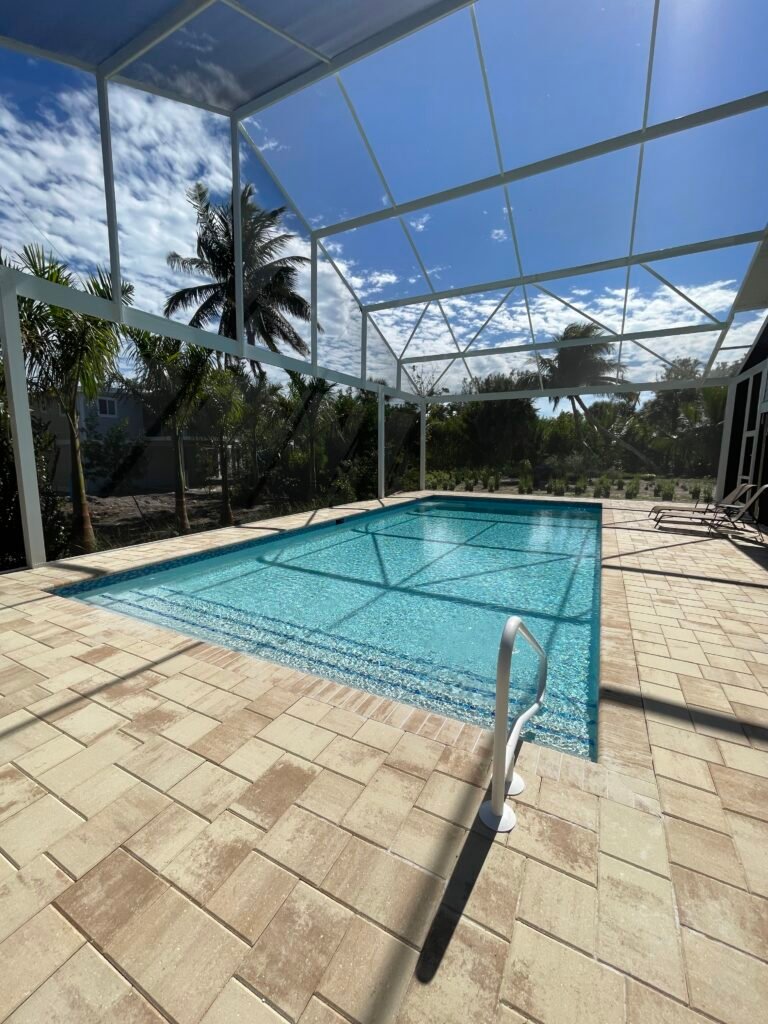
A pool cage is more than a screen around water. It is an extension of your living space, a covered outdoor environment where you can swim, relax, and entertain without dealing with insects, leaves, or direct sun exposure throughout the day.
Key benefits of a screen enclosure:
- Bug control. No-see-ums, mosquitoes, and other insects are a genuine quality-of-life issue on and near the water. A well-screened enclosure makes evening pool use significantly more comfortable.
- Debris reduction. Less organic material in the water means less strain on filtration and fewer chemicals needed to maintain water balance.
- Extended use. A shaded, screened environment makes afternoon swims in peak summer more comfortable and protects outdoor furniture from UV and weather exposure.
- Privacy. Depending on property layout, enclosures can add a layer of visual privacy without requiring full fencing.
For homeowners on Sanibel, Captiva, and other coastal properties, these benefits are compounded by proximity to salt air, wind-driven debris, and insect pressure from nearby waterways.
Permitting and Engineering Requirements for Pool Cages in Florida
Screen enclosures are regulated structures. They require both engineering and permitting before construction begins, and that requirement exists for good reason. Pool cages must be built to withstand hurricane-force winds and meet current Florida Building Code standards.
What the permitting and engineering process involves:
- Stamped structural drawings from a licensed engineer
- Permit application and review through the local building department
- Inspections at required stages of construction
The engineering component specifies frame sizing, anchor requirements, roof configuration, and connection details based on the wind exposure category for the specific property. On barrier islands like Sanibel and Captiva, wind exposure classifications are higher than inland, which directly affects both the design requirements and the materials specified.
Permitting timelines vary by county and current workload. The enclosure permit is separate from the pool permit and runs on its own review timeline. Building this into the project schedule early helps avoid delays.
When Is a Screen Enclosure Installed During Pool Construction?
Timing follows a specific sequence for good reason. For new pool construction, the screen enclosure is installed after decking is complete but before the pool interior finish (pebble, plaster, or quartz) is applied.
Why this order matters:
During enclosure framing and installation, metal shavings and construction debris can fall into the pool basin. If the interior finish is already applied, those materials can become embedded in the surface or cause damage that is difficult to correct. Installing the enclosure before the finish eliminates that risk and protects the quality of the final product.
The standard construction sequence:
- Shell construction and rough plumbing
- Deck installation (pavers, travertine, or concrete)
- Screen enclosure framing and screening
- Interior pool finish (pebble, plaster, or quartz)
- Final equipment startup and inspections
For pool renovations where a new finish is part of the scope, the same sequencing logic applies.
Screen Types: From Standard to No-See-Um
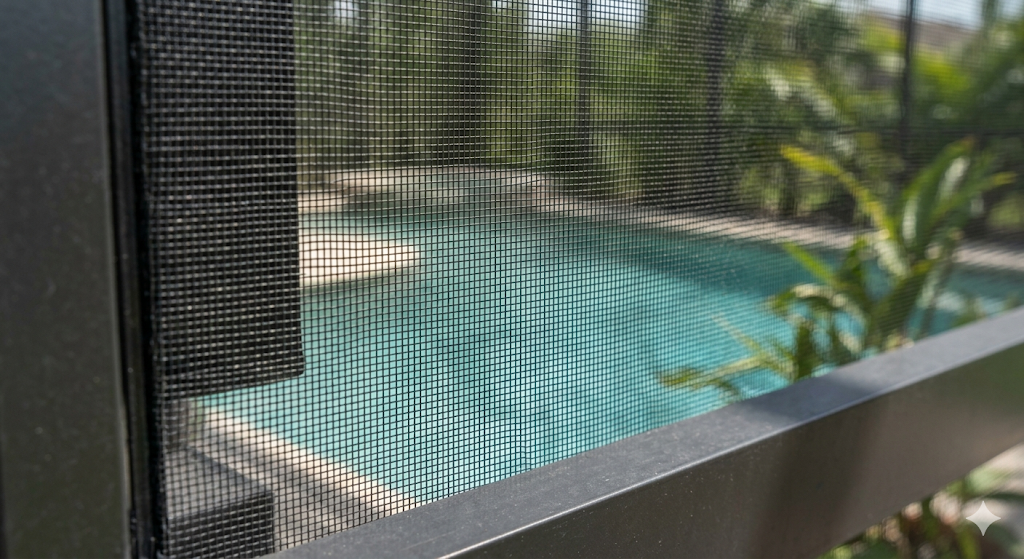
Not all pool screen is the same. The mesh type you choose affects airflow, visibility, bug protection, and long-term durability. Here is a breakdown of the main options:
Standard Screen
The most common option. Good airflow, clear sightlines, and effective protection against larger insects including mosquitoes and flies. This is the baseline most enclosures are built with and performs well for most properties.
Super Screen / Superior Screen
A heavier-duty mesh with a tighter weave than standard. It offers improved tear resistance, better UV durability, and a longer service life. For properties with heavy debris loads or high-frequency use, this is a worthwhile upgrade from standard.
No-See-Um Screen
Designed specifically for the tiny biting insects, no-see-ums and sand gnats, that standard mesh does not stop. The holes are significantly smaller, which reduces airflow somewhat, but for waterfront properties on Sanibel and Captiva where these insects are particularly prevalent, the difference in comfort is noticeable.
The trade-off with tighter mesh is a modest reduction in air circulation and light transmission. For most homeowners in high-insect coastal areas, that is an easy trade.
Pool Cage Frame Styles and Roof Configurations
Enclosures come in a range of framing styles depending on property layout, pool shape, and design preference.
Single-Pitch (Shed) Roof
A simple sloped roof design. Cost-effective and structurally straightforward. Works well on properties where a lower profile is preferred or where the enclosure needs to fit alongside the home closely.
Hip Roof
A peaked configuration that provides more interior height and a more traditional appearance. Hip roofs are common on larger pool decks where added headroom improves the feel of the space.
Attached and Custom Configurations
For luxury properties, enclosures can be designed with custom rooflines or integrated directly with the home’s existing lanai or covered structure. These designs require more detailed engineering but offer a more seamless connection with the overall architecture of the home.
Frame materials are typically aluminum, chosen for corrosion resistance in salt air environments. On coastal properties, aluminum framing is standard rather than optional. Salt air significantly accelerates degradation of other metals over time.
Screen Enclosures for Pool Renovations
If you’re renovating an existing pool, the enclosure may or may not need to be replaced depending on its current condition.
Rescreening vs. full enclosure replacement:
In many cases, a structurally sound enclosure frame can remain in place while only the mesh is replaced. Rescreening is a cost-effective option when the frame is in good condition but the screen material has deteriorated from age, UV exposure, or storm damage.
If a new pool finish is being applied as part of the renovation, the installation sequence still applies. Enclosure work is completed before the interior finish goes in.
Post-Hurricane Ian considerations:
Many enclosures in Lee and Collier counties were damaged by Hurricane Ian and subsequently repaired or rebuilt. It is worth having any existing enclosure inspected for structural integrity, anchor condition, and whether current repairs meet updated wind load requirements before investing in a new pool finish or major renovation.
Coordinating Decking and Enclosure Design
Because decking is installed before the enclosure, both need to be coordinated during the design phase. Enclosure footers are anchored into the deck surface, so column placement, layout, and any edge detailing need to account for where the cage will land.
For homeowners selecting pavers, travertine, or other premium deck materials, this coordination also affects pattern layout, expansion joint placement, and drainage slope design. Getting these details aligned early avoids field adjustments that can affect both the appearance of the deck and the structural positioning of the enclosure.
Working with a builder who manages both scopes, or at minimum communicates clearly across subcontractors, makes this coordination significantly smoother.
Frequently Asked Questions
Do I need a permit for a pool cage in Florida?
Yes. Screen enclosures are regulated structures requiring both a building permit and engineered structural drawings. This applies to new enclosures and, in many cases, to replacement enclosures following storm damage.
How long does it take to permit and build a screen enclosure?
Permitting timelines vary by county and current department workload. The enclosure installation itself typically takes a few days to about a week once permitted and materials are on site. Plan for the permit review process to take several weeks and factor that into the overall project timeline.
What is the difference between rescreening and a new enclosure?
Rescreening replaces only the mesh material while retaining the existing frame. A full enclosure replacement includes both frame and screen. The right choice depends on the age, condition, and structural integrity of the existing frame.
Is no-see-um screen worth the upgrade in coastal Florida?
For waterfront properties on Sanibel, Captiva, or similar coastal areas, it is worth serious consideration. If no-see-ums and sand gnats are a regular issue on the property, the tighter mesh makes a meaningful difference in how comfortable the outdoor space is, particularly in the evening.
Can a pool cage be attached directly to the house?
Yes. Attached screen rooms are common and require coordination with the home’s existing structure. They typically require additional engineering detail to ensure the connection point is properly anchored and meets current code.
Does a screen enclosure reduce pool maintenance needs?
A screened enclosure reduces the amount of debris entering the pool and can reduce some chemical demand over time, but it does not eliminate regular maintenance. The enclosure screen itself also requires periodic cleaning and eventual rescreening as the material ages.
Are there updated requirements post-Hurricane Ian for screen enclosures?
In some areas of Lee County, updated requirements or specific rebuilding provisions apply following Hurricane Ian. A licensed contractor familiar with local codes can clarify what applies to a specific property.
Working With a Contractor Who Understands the Full Scope
Pool cages are not an afterthought. They are a structural component of the outdoor living space that require engineering, permitting, and careful coordination with pool and deck construction. On coastal properties in particular, the wind load requirements, material specifications, and installation sequencing are specific enough that experience in barrier island and waterfront construction makes a meaningful difference in how smoothly the process goes.
We design and build pools with screen enclosures as part of a complete outdoor living plan. See our work across Naples, Marco Island, and Fort Myers. Book an in-home consultation to plan your pool and enclosure together.
Coastal Custom Pool & Spa has been building and managing luxury pool projects throughout Southwest Florida since 1992. If you have questions about screen enclosures as part of a new build or renovation, contact us to schedule a consultation.