A pool gives back years of use, and at some point it tells you it is ready for renewal. Knowing how to read those signs helps you act at the right time, before a cosmetic issue becomes a structural one. Here is what to look for, and what the work involves.
The lifespan to keep in mind
In Southwest Florida, a pool’s interior finish generally lasts around twelve to fifteen years before it is due for renewal. That is a useful anchor. If your pool is approaching that range, the signs below are worth watching for. If it is well past it and still original, renewal is likely overdue rather than early.
Signs your pool is ready for renewal
- A rough or chalky surface. If the interior feels abrasive underfoot or leaves a residue, the finish is wearing through.
- Persistent stains or discoloration. Patches that return no matter how you treat the water often mean the surface itself is the issue.
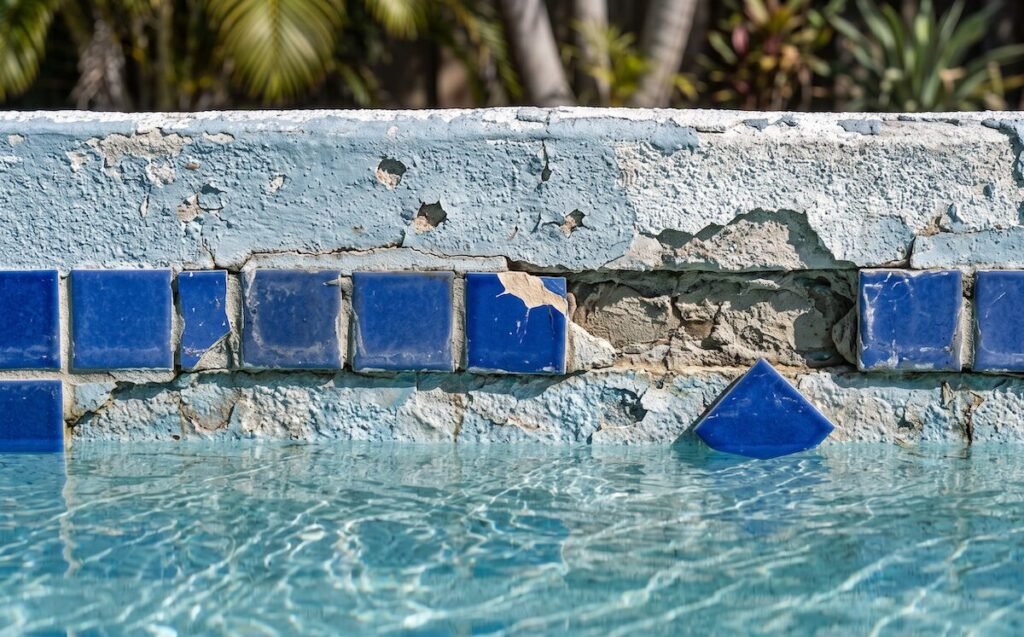
- Chips, flaking, or spalling. Small areas where the finish is lifting tend to spread over time.
- Loose or missing tile. A few loose tiles can be repaired, but widespread tile failure usually accompanies an aging pool.
- Chemistry that will not hold. A deteriorating surface can make balanced water harder to maintain, so rising effort is a quiet signal.
- A dated look. Sometimes the pool is sound and simply no longer matches the home or your taste, which is a perfectly good reason to remodel.
- Visible cracks or leaks. These point toward the structural end of the spectrum and deserve a professional assessment.
Resurfacing, remodel, or structural work?
Not every renewal is the same size of project, and matching the work to the need keeps your investment sensible.
Surface refresh
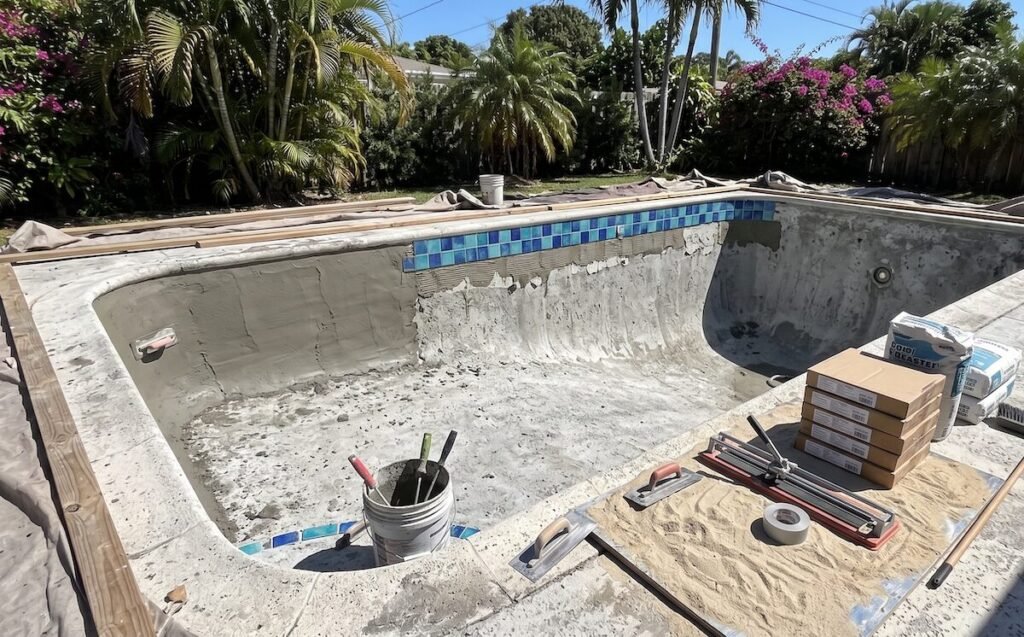
Renewing the interior finish, and often the waterline tile, restores the look and feel of the pool without changing its shape. This is the most common renewal and the least disruptive.
Full cosmetic remodel
A larger remodel can update finish, tile, coping, decking, and add features such as a ledge, lighting, or a water feature, reshaping the experience while keeping the existing shell.
Structural work
When cracks, settling, or shell issues are involved, the work goes deeper and takes longer. At this point it is also worth weighing renovation against starting fresh.
What to expect on timeline
Timelines vary with scope, but as a general guide: a surface refresh typically runs from a few days to about two weeks, a full cosmetic remodel usually takes one to two months, and structural work runs longer. One practical note: surface-only resurfacing often does not require a permit, while larger structural changes generally do.
Planning the budget
The cost of renewal depends entirely on which path fits your pool. Setting expectations early, then modeling a project around your own pool’s size and the work you have in mind, keeps the decision grounded.
Not sure which your pool needs?
We will take a look and give you an honest read on whether it is a refresh, a remodel, or something more. Coastal Custom Pool & Spa has renovated pools across Southwest Florida for more than thirty years.
Request an assessment | Call (239) 437-3636